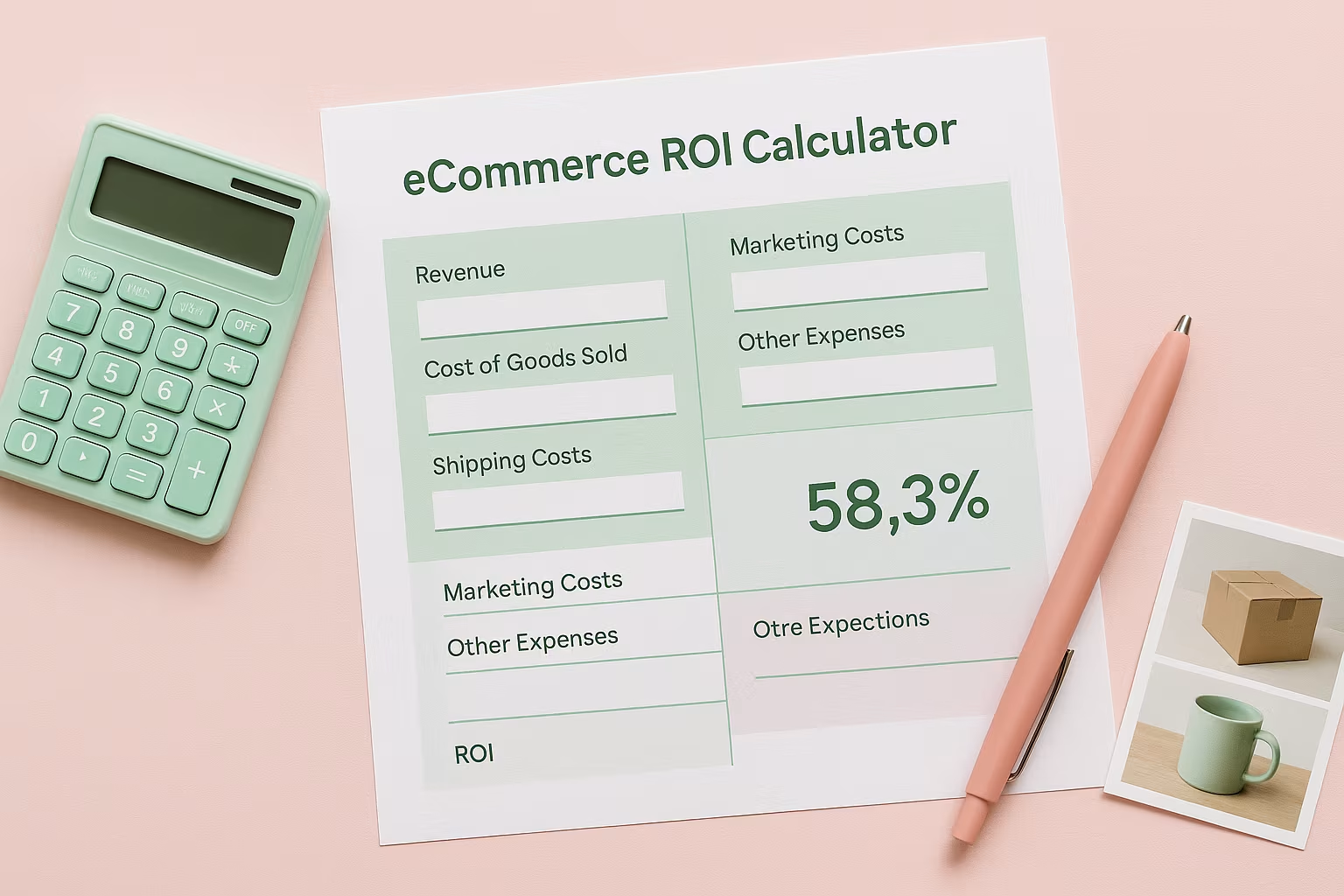
Contribution Margin Calculator: Measure What Each Sale Contributes to Profit
Calculate your per-order profit and break-even point instantly.
Whether you're selling private-label supplements, skincare products, or coffee online, this contribution margin tool shows exactly how much money you keep from every sale after covering product costs, fulfillment, shipping, and platform fees.
Enter your numbers below to see your contribution margin in dollars and percentage, plus how many units you need to sell each month to break even.
Use this tool to test pricing strategies, compare product profitability, and make smarter decisions about what to sell and how to price it.
Calculate Your Margins in 60 Seconds
Getting accurate results takes just a few minutes. Here's what to enter:
Selling Price (per unit) - The retail price your customers pay. Use your actual selling price after any regular discounts you offer.
Product Cost / COGS (per unit) - Your base unit cost from your supplier. This is the per-unit product cost from your manufacturer or wholesaler. Don't include fulfillment or shipping here.
Fulfillment / Handling Fee (per order) - Pick, pack, and handling charges per order. If fulfillment is included in your product cost, leave this blank. Otherwise, enter any 3PL or fulfillment partner fees here.
Shipping You Cover (per order) - Any shipping costs you subsidize. If you offer free shipping but pay for it yourself, enter that amount. Leave blank if customers pay full shipping.
Platform + Payment Fees (%) - Combined percentage fees from your sales platform and payment processor. Examples:
- Shopify: ~2.9% + $0.30 per transaction
- TikTok Shop: 5-8% depending on category
- Payment processors: 2.5-3% typically
The calculator converts this percentage to a dollar amount based on your selling price.
Monthly Fixed Costs (Optional) - Your total monthly overhead: rent, software, salaries, marketing retainers, and other fixed expenses. When you include this, the calculator shows how many units you need to sell to break even. This is crucial for financial planning and setting realistic sales targets.
Click "Calculate" to see your results instantly.
What Your Numbers Actually Mean (And Why They Matter)
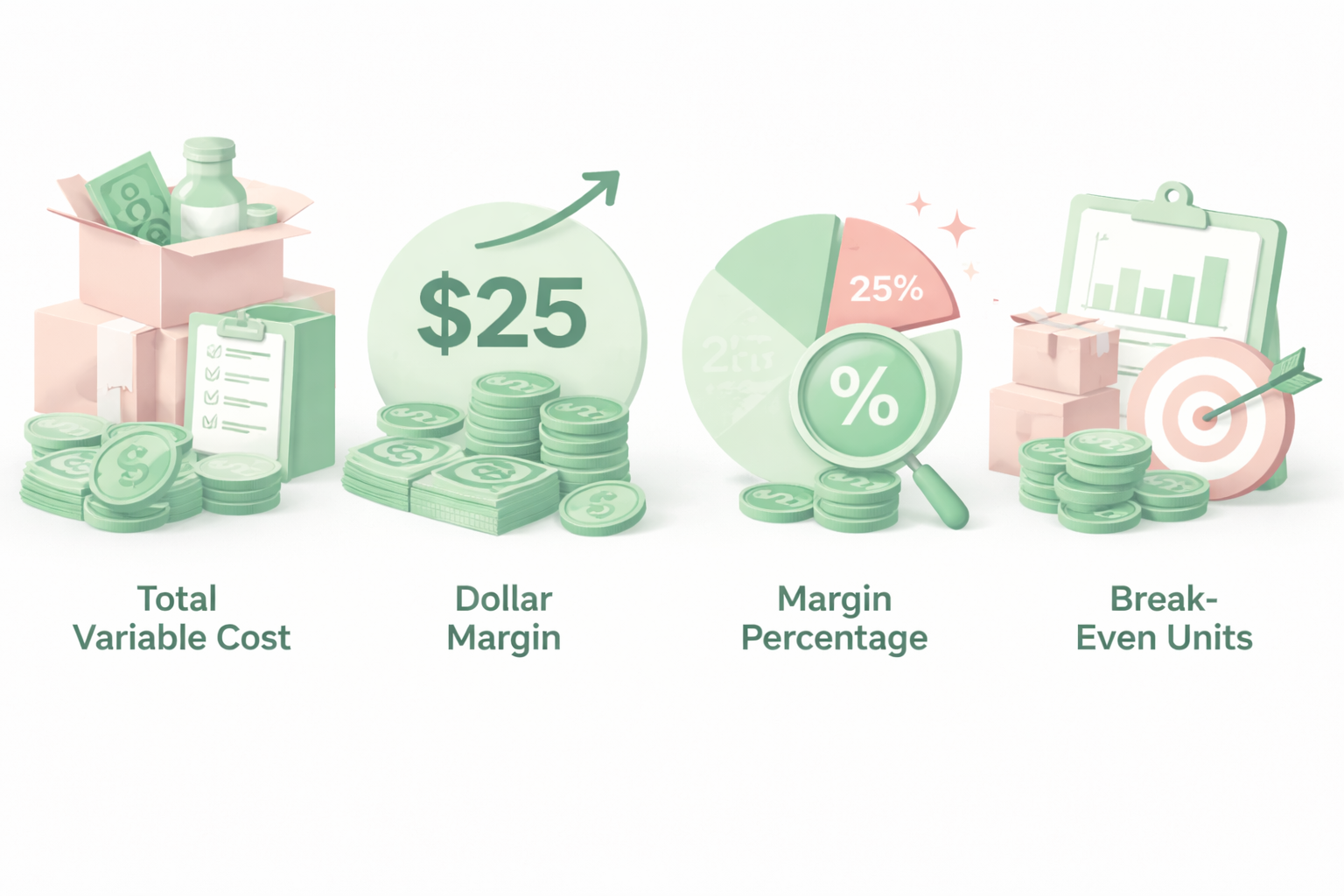
The calculator provides four key metrics:
Total Variable Cost Per Order
This is what you're spending to get each product into a customer's hands: the sum of product cost, fulfillment, shipping, and platform fees. Compare this number across products to see which have the most efficient cost structures.
Contribution Margin (Dollar Amount)
This is the money you keep from each sale after covering all variable costs. Higher dollar amounts mean more money flows toward covering your monthly overhead and generating profit.
For Example, if you sell a private-label supplement for $45 and your variable costs total $20, your contribution margin is $25. Every sale contributes $25 toward your fixed costs and profit.
Contribution Margin (Percentage)
Your margin is expressed as a percentage of the selling price. This helps you compare profitability across products at different price points.
The calculator shows a health indicator:
- Strong (30%+): Excellent flexibility for growth and marketing
- OK (15-30%): Workable margins with less room for ad spend
- Low (0-15%): Tight margins that may not support sustainable growth
- Negative: You're losing money on each sale; adjust pricing or costs immediately
Industry benchmarks vary by product category and business model. For e-commerce brands, understanding what makes a good contribution margin helps you set realistic profitability targets and make informed pricing decisions.
Break-Even Units Per Month
When you enter fixed costs, this shows how many units you must sell to cover all expenses. This is your minimum viable sales target; sell more and you're profitable, sell less, and you're operating at a loss.
Example: $3,000 monthly fixed costs ÷ $25 contribution margin per unit = 120 units to break even. Every sale beyond 120 units is pure profit.
5 Powerful Ways to Use Contribution Margin Tool
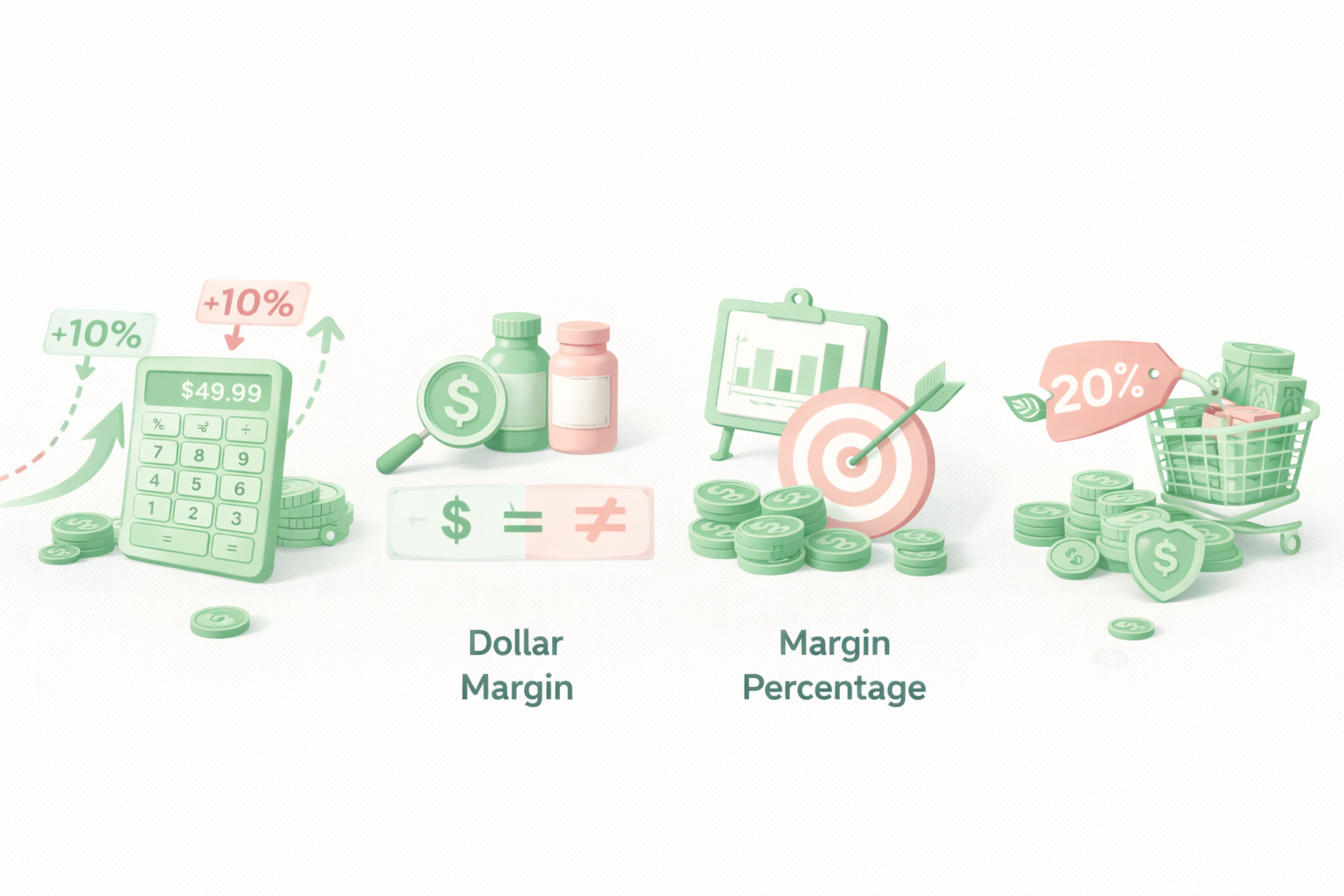
Beyond basic calculations, this tool unlocks strategic insights that drive smarter business decisions.
1. Test Different Pricing Scenarios
Model price changes before making them live. See how a $2 increase or $3 decrease affects your margins and break-even point. This removes guesswork from pricing decisions.
Run these tests:
- What happens if you raise prices by 10%?
- Can you afford a 15% discount and still profit?
- What price point gives you a 50% contribution margin?
2. Compare Products Before Adding Them
Before launching new products, calculate their projected margins. Compare new items against your existing bestsellers to ensure every addition strengthens your profitability.
For private-label sellers, this analysis is essential because product selection directly impacts your brand's long-term success. Focus on products with strong margins that align with your target customer's needs.
3. Set Sustainable Ad Budgets
Your contribution margin sets the ceiling for customer acquisition costs. If your margin is $25 per order and you want a $10 profit, you can spend up to $15 acquiring each customer through ads.
Calculate your maximum customer acquisition cost based on margins and customer lifetime value to ensure your marketing investments stay profitable.
4. Plan Promotions That Protect Margins
Design sales and discounts that drive volume without destroying profitability. A 20% discount on a product with 50% margins is very different from the same discount on 25% margins. Model promotional scenarios before running them.
5. Optimize Your Product Mix
Calculate margins for every item in your catalog. Double down on promoting your highest-margin products and phase out underperformers. This strategic focus helps you build a leaner, more profitable product line that's easier to market and manage.
Boost Your Margins: Proven Tactics That Work
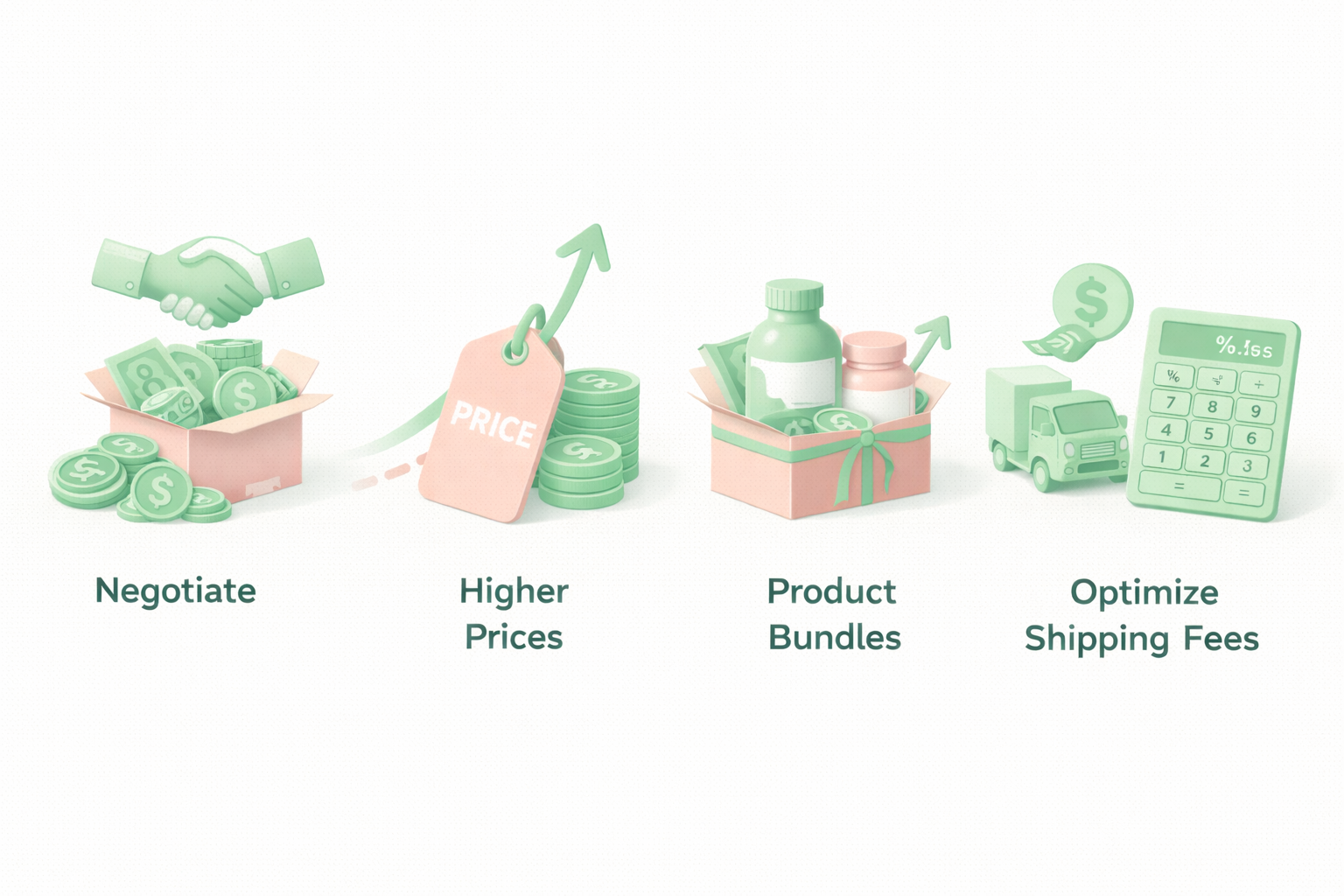
If your results show lower margins than expected, here's how to improve them:
Negotiate Better Product Costs - Work with suppliers for volume discounts. Consider switching to a private-label business model, which offers competitive pricing on quality products without minimum orders.
Test Higher Prices - Small increases often don't hurt conversion rates. A $5 price bump adds $5 directly to your margin. Focus on building a strong brand that justifies premium pricing.
Bundle Products - Create bundles that spread fixed per-order costs across more items. Bundle complementary items like skincare products or supplement packs to increase average order value.
Optimize Shipping Strategy - Test free shipping thresholds that encourage larger orders. Efficient fulfillment solutions help keep shipping streamlined and cost-efficient.
Reduce Platform Fees - As sales grow, negotiate better payment processing rates or explore platforms with lower commissions. Consider selling on multiple platforms to optimize fee structures.
Real Numbers: Traditional vs. Optimized Margins
See how different approaches affect your profitability:
Traditional Dropshipping Model:
- Selling price: $50
- Product cost: $25
- Shipping: $8
- Platform fees (2.9%): $1.45
- Total variable costs: $34.45
- Contribution margin: $15.55 (31%)
This margin leaves limited room for customer acquisition costs, making profitable scaling difficult.
Optimized Private Label Model:
- Selling price: $50
- Product cost: $12
- Shipping: $5
- Platform fees (2.9%): $1.45
- Total variable costs: $18.45
- Contribution margin: $31.55 (63%)
The higher margin provides significantly more flexibility for marketing, customer acquisition, and brand building. Understanding the difference between dropshipping and private label helps you choose the right model for your goals.
When you control your product costs through private labeling, you can sell products across categories like supplements, skincare, coffee, and pet care with stronger margins and better long-term profitability.
Start Making Data-Driven Decisions
Stop guessing at profitability. Use our calculator to understand exactly what each product contributes to your bottom line. Test pricing strategies, evaluate new products, and build a sustainable business with clear visibility into your margins.
Calculate your numbers above, then take action on the insights you discover. Combined with smart product selection and efficient operations, strong contribution margins set the foundation for long-term e-commerce success.
FAQ


Related blogs
SKU Rationalization Score Tool: Cut Waste, Improve Margins, and Scale the Right Products
Chargeback ROI Calculator: Predict Your Savings and ROI in Under 10 Seconds
Break-Even ROAS Calculator: Find Out What You Can Afford to Spend on Ads