Influencer Marketing ROI Forecaster Calculator: Know Your True ROI Before Spending a Dollar on Influencers
.avif)
Planning an influencer campaign for your dropshipping brand, but unsure about the financial outcome? You're not alone. Most supplement, skincare, and coffee brands struggle to predict whether that $500 or $5,000 influencer partnership will actually pay off.
The Influencer Marketing ROI Forecaster takes the guesswork out of influencer marketing by showing you exactly what to expect from your campaign before you spend a dollar.
Whether you're running a private-label supplement company or launching your first coffee brand, this tool helps you make data-driven decisions about influencer partnerships.
How the Influencer Marketing ROI Forecaster Works
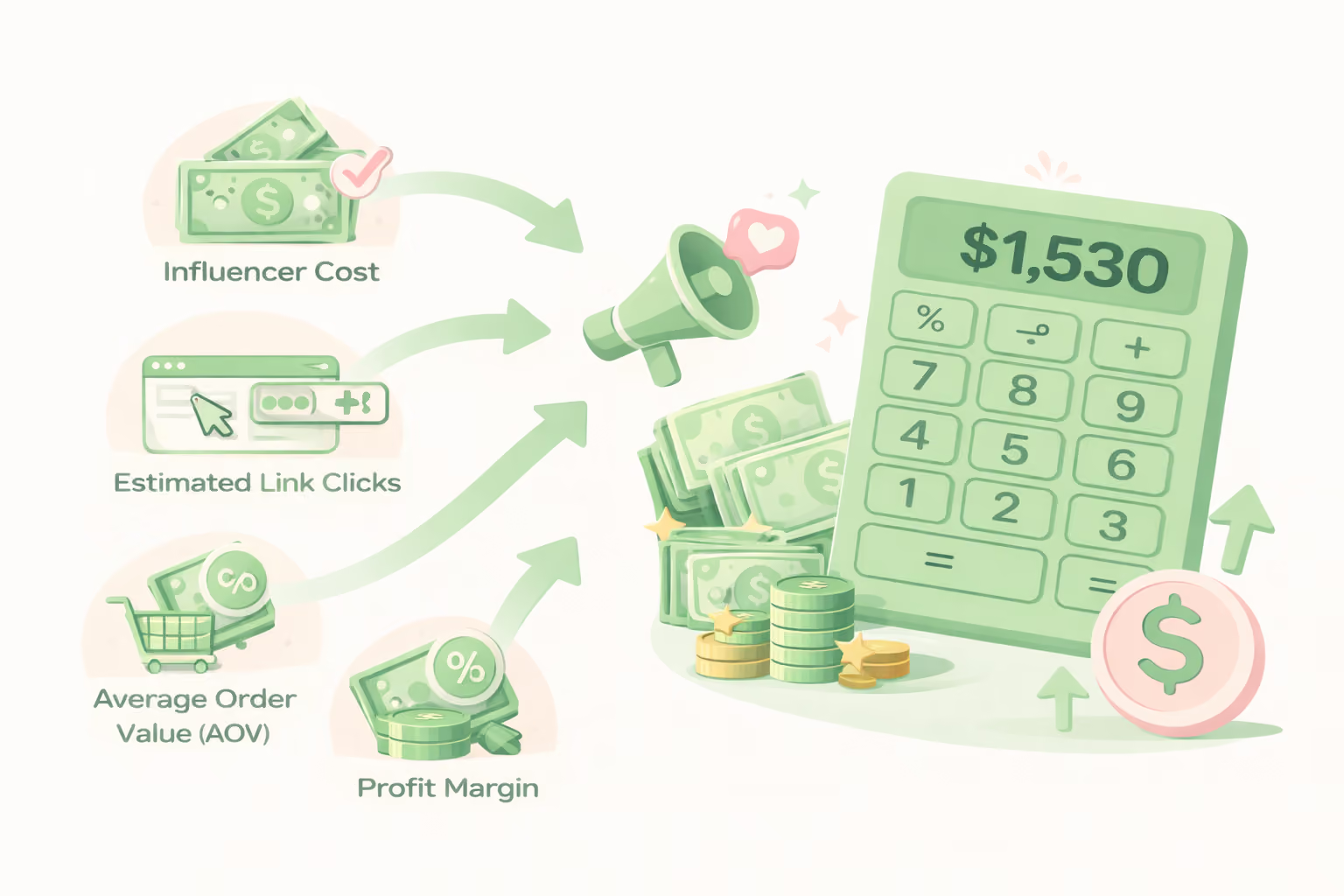
The calculator uses a straightforward five-input model that maps to the real economics of influencer campaigns. Here's what you'll need to know before using it:
The Five Critical Inputs
1. Influencer Cost ($)
This is your total campaign investment, including direct payment to the influencer, product samples, creator fees, and any production costs.
Most brands working with micro-influencers spend between $200-$1,000 per campaign, while larger partnerships can range from $2,000-$10,000.
2. Estimated Link Clicks
This represents how many people you expect to click from the influencer's content to your store.
Be realistic here; even highly engaged audiences typically convert at 1-3% click-through rates. Instagram posts see 0.5-2% click rates, TikTok videos get 2-5%, and YouTube typically delivers 3-8%.
3. Store Conversion Rate (%)
Your conversion rate is the percentage of visitors who actually complete a purchase. New stores typically see 0.8-2.5% conversion rates, while established brands can hit 3-5%. Health and wellness products typically convert at 2-3%, while beauty products might see 1.5-2.5%.
4. Average Order Value (AOV) ($)
This is your average cart value per customer. Supplement products might be $35-$50, while bundles can reach $60-$100. Coffee brands often see $25-$40, while skincare brands can achieve $50-$80 with multi-product routines.
5. Profit Margin (%)
This is your margin after accounting for product costs, fulfillment fees, and payment processing.
For brands using dropshipping or private-label models, this typically ranges from 25-40%. Private-label supplements usually see 30-40% margins, while competitive categories like coffee might be closer to 20-30%.
What the Calculator Shows You
Once you input your numbers, the calculator instantly provides seven critical metrics:
- Expected ROI (%): Your percentage return on investment
- Net Profit ($): Your actual profit after campaign costs
- Estimated Orders: How many sales the campaign should generate
- Estimated Revenue: Total sales from the campaign
- Estimated Profit: Gross profit before subtracting influencer costs
- Break-Even Orders: The minimum sales needed to recover your investment
- Cost Per Acquisition (CPA): What you're paying to acquire each customer
These metrics help you quickly determine if a campaign makes financial sense before you commit.
Reading Your Results: What Good ROI Looks Like
Understanding your results is just as important as generating them. Here's how to interpret what the calculator tells you:
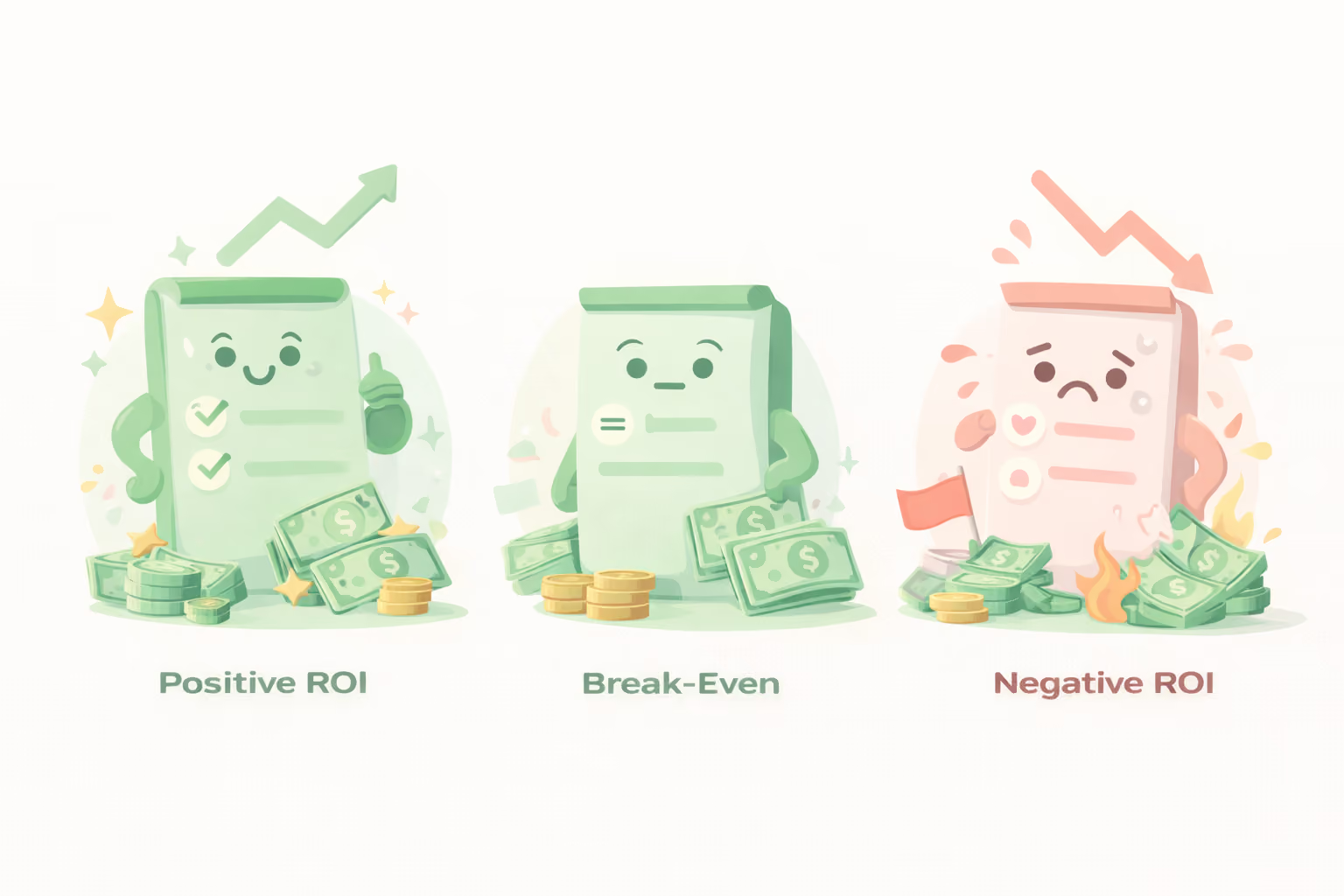
Positive vs. Negative ROI Scenarios
Positive ROI (+20% or higher): You're making money on the campaign. For every dollar spent, you're earning $1.20 or more back. This is your green light scenario; the campaign should be profitable.
Break-even ROI (0% to +20%): You're recovering costs but barely profiting. This might still be worthwhile if you're building brand awareness or acquiring customers for future purchases through email marketing strategies or subscriptions.
Negative ROI (-1% to -50%): You're losing money on the initial campaign. This doesn't necessarily mean the influencer partnership is bad; if you have strong retention strategies or high customer lifetime value, you might still profit long-term.
Severe Negative ROI (-50% or worse): Red flag territory. Either your assumptions are off, your conversion funnel needs work, or this particular influencer isn't the right fit for your brand.
Real-World Example
Let's say you're a supplement brand considering a $500 partnership with a fitness micro-influencer:
- Expected clicks: 1,000
- Your conversion rate: 2%
- AOV: $45
- Profit margin: 30%
The calculator shows:
- Orders: 20
- Revenue: $900
- Gross profit: $270
- Net profit: -$230 (after $500 influencer cost)
- ROI: -46%
This looks terrible at first glance. But if your average customer makes 2-3 repeat purchases over their lifetime, those 20 initial customers could be worth $1,800-$2,700 in total profit, making the campaign worthwhile for customer acquisition.
When to Proceed Despite Negative ROI
Some scenarios justify negative first-purchase ROI:
- You have a strong email marketing funnel that drives repeat purchases
- You're testing a new audience segment for long-term growth
- The influencer provides valuable content you can repurpose
- You're building brand awareness in a competitive market
- Your product naturally drives subscriptions or recurring orders
Optimizing Your Influencer Campaigns for Better ROI
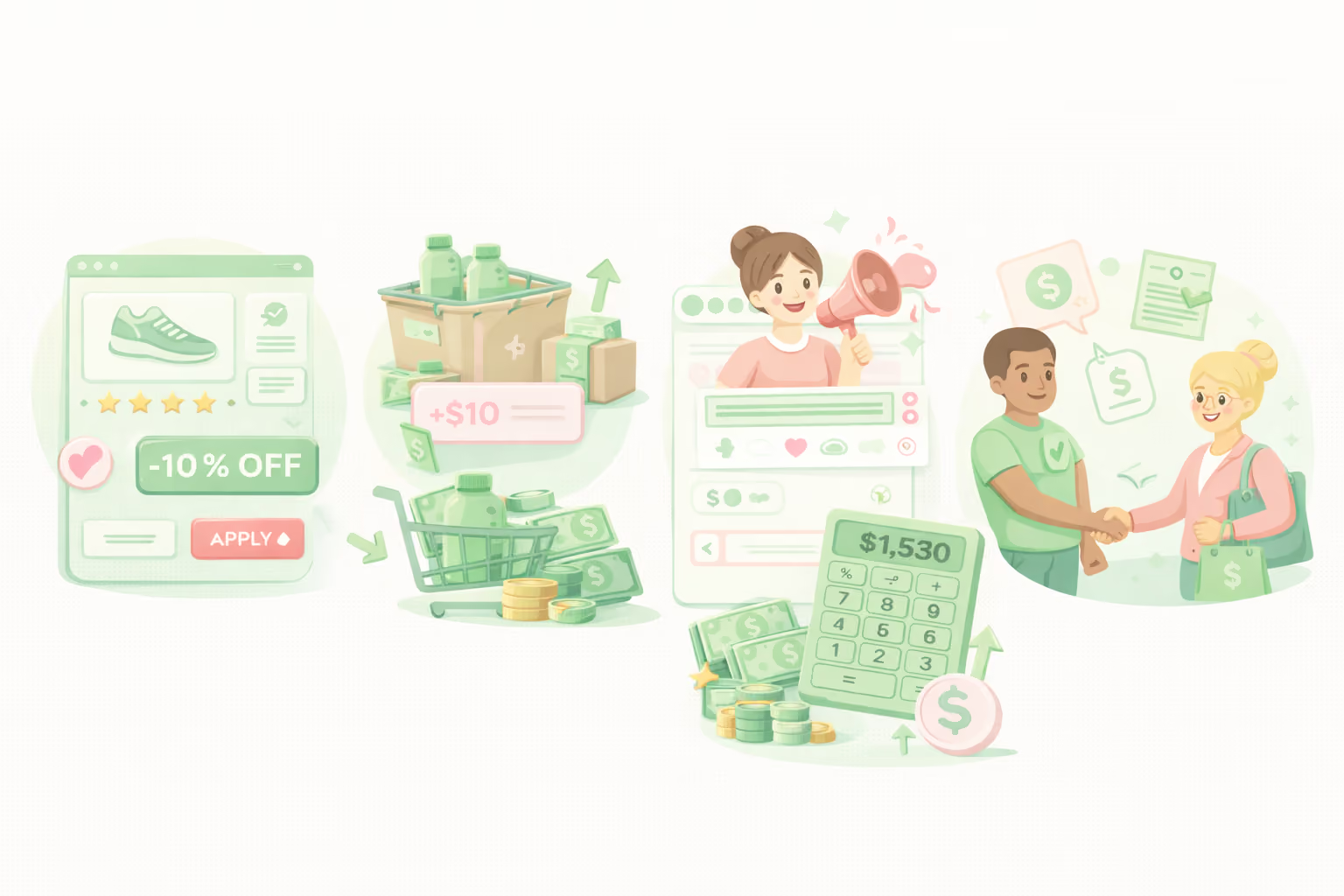
Getting positive ROI from influencer marketing isn't just about finding the right creator; it's about optimizing your entire funnel. Here's how to improve each component:
Improving Your Conversion Rate
Your conversion rate has the biggest impact on ROI. Small improvements here multiply across your entire campaign:
- Optimize product pages: Use high-quality images, clear benefit statements, and social proof
- Offer exclusive discounts: Give the influencer a unique code to incentivize purchases
- Create urgency: Limited-time offers tied to the influencer post increase conversion
- Simplify checkout: Reduce friction with one-click payment options
Brands that optimize their landing pages for influencer traffic typically see 30-50% conversion rate improvements.
Increasing Average Order Value
Higher AOV means better ROI without needing more traffic. Bundle complementary products (like creating product bundles that sell), add order bumps at checkout, implement quantity discounts, and offer subscription options.
Even a $10 increase in AOV can transform a break-even campaign into a profitable one.
Selecting the Right Influencers
Not all influencers deliver equal results. Focus on audience alignment, engagement quality over vanity metrics, authentic content style, and previous performance data.
Before reaching out, learn how to collaborate with influencers effectively to maximize your partnership potential. Micro-influencers (10K-100K followers) often deliver better ROI than mega-influencers because of higher engagement rates and lower costs.
Negotiating Better Terms
Smart negotiation can improve your ROI without changing your conversion metrics. Consider performance-based deals with commission on sales, negotiate content rights for repurposing, bundle multiple posts at a discount, or establish long-term affiliate relationships.
Many successful brands combine a small flat fee with performance incentives to align interests.
Common Influencer Marketing Mistakes That Kill ROI
Even with the calculator, brands still make predictable mistakes that destroy campaign profitability. Avoid these pitfalls:
Mistake #1: Ignoring Your True Costs
Many brands only count the influencer fee but forget about shipping costs, payment processing fees (2.9% + $0.30 per transaction), platform fees, returns, and discount codes that reduce margins.
Understanding the true cost of starting a supplement company or beauty brand helps you budget accurately. Always account for your complete cost structure. What looks like 40% margin might actually be 25% after all fees.
Mistake #2: Unrealistic Traffic Expectations
Brands consistently overestimate click-through rates. Unless the content goes viral, expect modest traffic. Instagram posts see 0.5-2% clicks, Stories get 3-5%, TikTok videos generate 1-3% profile visits, and YouTube delivers 3-8% link clicks.
Start conservatively to protect yourself from overpaying.
Mistake #3: Forgetting About Customer Lifetime Value
The calculator shows first-purchase ROI, but smart brands think longer-term. Calculate your customer lifetime value to understand the true worth of each acquisition.
If your average customer is worth $150 over 12 months, acquiring them for $50 makes sense even if the first order loses money.
Mistake #4: Not Testing Before Scaling
Never commit your entire marketing budget to one influencer. Work with 2-3 micro-influencers first, test different offers and platforms, and measure results for 7-14 days.
Understanding how to measure the effectiveness of influencer marketing ensures you're making data-driven decisions. Brands that test systematically achieve 2-3x better ROI than those that guess.
Mistake #5: Weak Follow-Up Strategy
The campaign doesn't end when the influencer posts. Maximize ROI through email capture, retargeting ads, post-purchase sequences, content repurposing, and relationship building. Implementing smart retention strategies helps you turn one-time buyers into loyal customers.
Brands with strong retention strategies can afford 30-40% higher customer acquisition costs because they recoup investment over time.
Treat Influencer Campaigns Like Investments, Not Experiments
Influencer marketing works best when it’s planned with the same discipline as any other growth investment.
Instead of guessing based on follower counts or engagement rates, use real numbers, costs, clicks, conversion rates, AOV, and margins to forecast outcomes before you spend.
The forecaster calculator helps you see profitability, break-even points, and risk upfront, so you can decide with confidence. Test smart, learn fast, and scale only what proves profitable. When you forecast first and spend second, influencer campaigns stop draining budgets and start driving predictable growth.
Frequently Asked Questions
Find answers to all of your unanswered questions
Want to learn more?
Explore our Help Center for detailed answers, expert advice, and step-by-step guides.
Related blogs
.avif)
What Are The Best Partners For Skin Care Brand Development?
.avif)
.avif)
.avif)