How to Start Your Own Coffee Brand: The Smart Way to Launch and Scale
Starting a coffee brand is easy to imagine and difficult to execute well.
Beyond choosing beans and packaging, long-term success depends on how clearly the brand is positioned, how consistently quality is delivered, and how early operational decisions support growth rather than restrict it.
The coffee market continues to expand, but it has also matured. Customers are more selective, competition is tighter, and many brands fail not because of poor products, but because their foundations were never built to scale.
This guide breaks down how you can start a coffee brand the smart way - focusing on decisions that support consistency, scalability, and brand equity from day one.
Start Your Own Coffee Brand With These 8 Steps
Launching a coffee brand, especially within private label coffee or a broader consumer packaged goods business, isn’t defined by a single moment but by a sequence of decisions that compound over time.
Each stage plays a distinct role in shaping how the brand enters the market, earns trust, and positions itself for sustainable growth.
Overlooking or rushing any one of these stages can limit scalability before momentum ever builds. This framework is written for founders who want their early decisions to hold up under scale, not just survive launch, so let’s dive into it.
1. Brand Planning
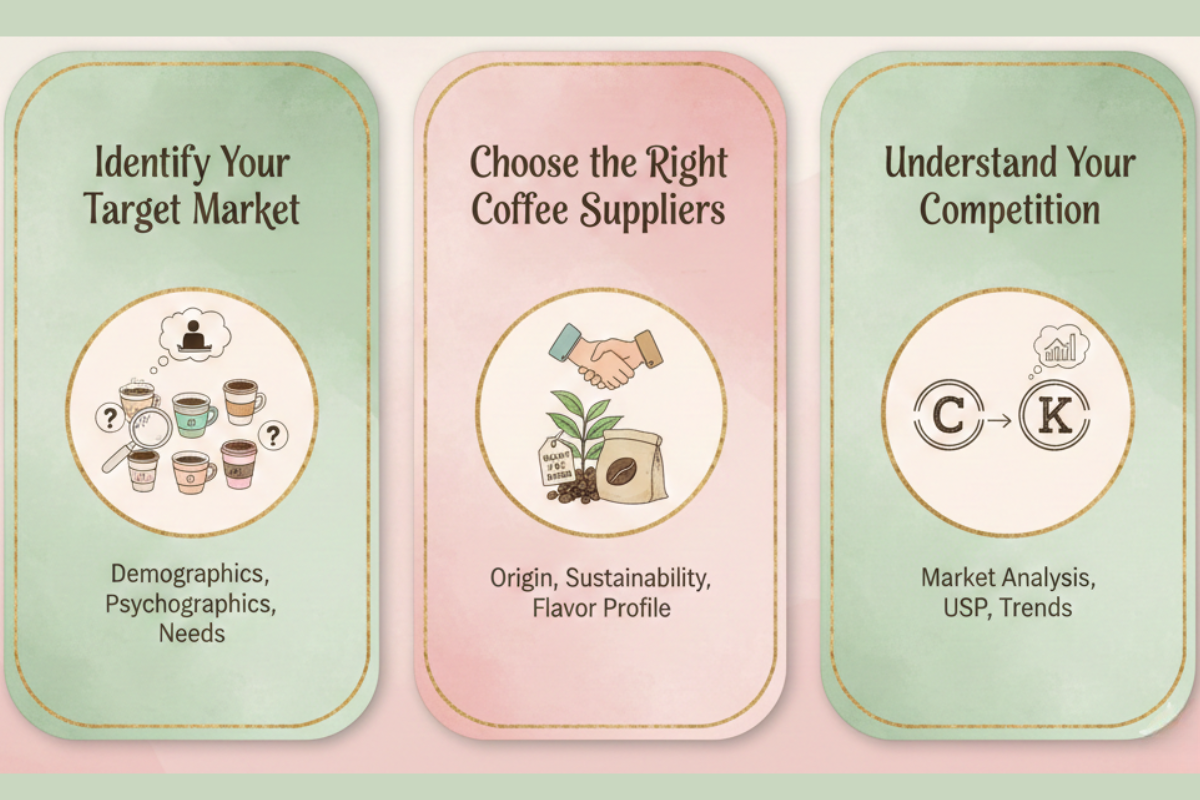
Planning is the foundation that shapes every future decision your coffee brand will make within a clear business plan. Without clarity at this stage, even strong products and branding efforts can lose direction.
This step focuses on aligning your market understanding, supplier choices, and competitive positioning before execution begins.
Identify Your Target Market
Understanding who your customers are is critical before any product or branding decisions are made.
A clearly defined target market allows you to tailor your coffee offerings, messaging, and channels with purpose. These are essential steps when deciding on your own coffee brand in a competitive space.
- Define ideal customer profiles based on taste preferences, lifestyle, and purchasing behavior.
- Use tools like Google Analytics and Facebook Insights to analyze demographics, interests, and behavior.
- Align product selection and marketing strategies with real customer needs
Choose the Right Coffee Suppliers
Your suppliers directly influence product quality, consistency, and scalability. Selecting partners without proper evaluation can limit growth or compromise standards later on. This stage ensures your supply chain supports both your current needs and long-term ambitions.
- Assess suppliers based on quality, certifications, and operational capacity
- Order product samples to evaluate taste and consistency firsthand
- Attend industry trade shows and coffee expos to discover ethical and sustainable sourcing partners
Understand Your Competition
Competitive awareness helps you position your coffee brand with intention rather than imitation. By analyzing what already exists, you can avoid crowded spaces and uncover opportunities others may have overlooked.
This step ensures your brand enters the market with a clear point of differentiation.
- Research direct and indirect competitors across online and local markets
- Use SWOT analysis to assess strengths, weaknesses, opportunities, and threats
- Identify gaps that allow your brand to stand out meaningfully
2. Build Your Brand Identity
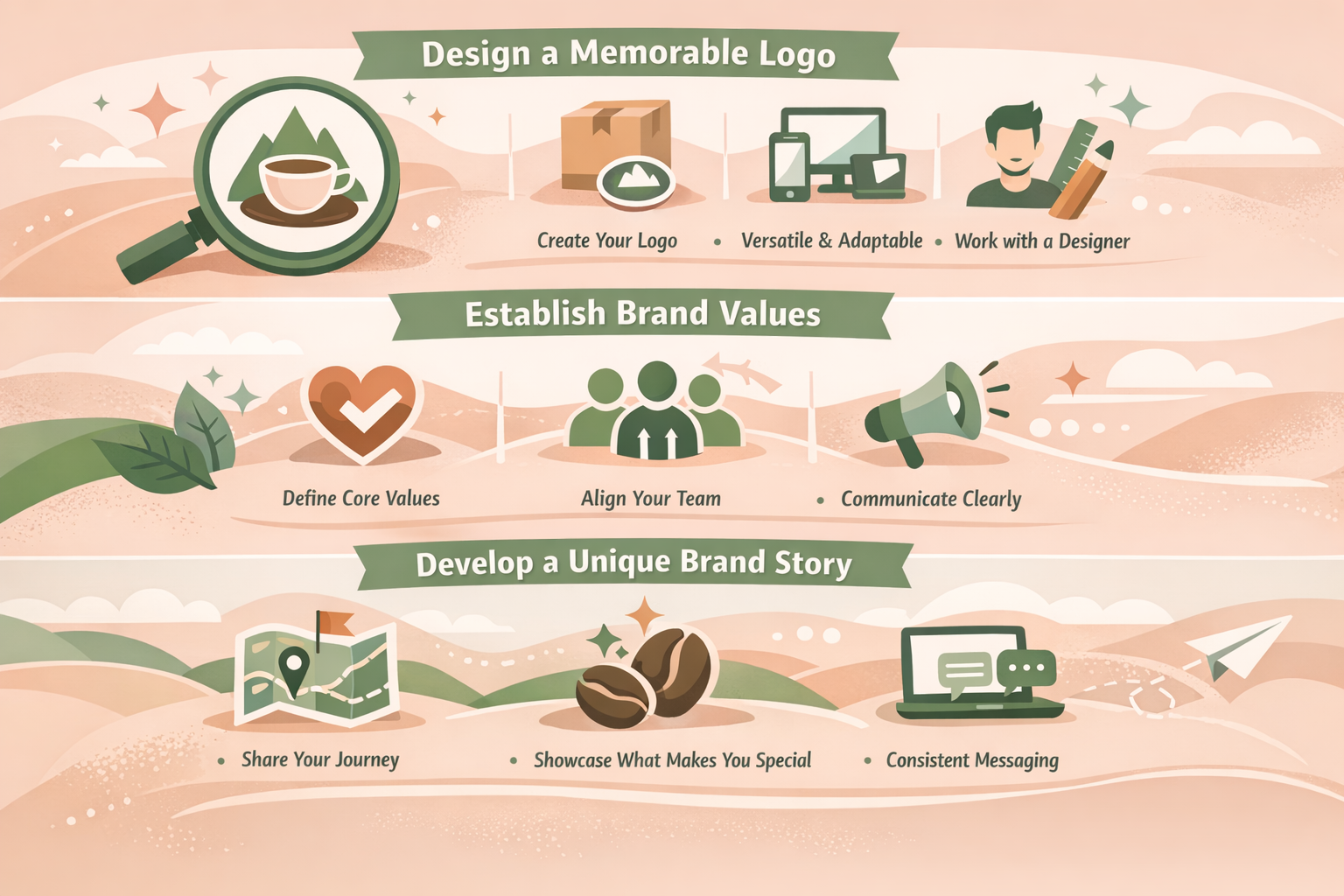
Your brand identity is what customers recognize, remember, and trust, especially in an online-first environment. This stage focuses on translating your vision into visual and emotional signals that create consistency across all touchpoints.
Design a Memorable Logo
A logo is often the first visual interaction customers have with your brand. It should communicate professionalism, relevance, and personality without explanation. Getting this right early prevents costly rebranding later.
- Create a logo that reflects your brand’s tone and target audience
- Ensure it works across packaging, digital platforms, and marketing materials
- Consider working with a professional designer for long-term scalability
Establish Brand Values
Brand values guide how your business communicates, operates, and grows. They help customers understand what your coffee brand stands for beyond the product itself. Clear values also align internal decision-making as the business scales.
- Define values that genuinely reflect your vision and priorities
- Communicate them consistently through packaging and marketing
- Ensure team alignment so values are lived, not just stated
Develop a Unique Brand Image and Story
A compelling brand story helps customers emotionally connect with your coffee. It adds meaning to the product and gives people a reason to choose your brand repeatedly. Consistency in storytelling reinforces trust and recognition.
- Highlight your journey, inspiration, and purpose
- Emphasize what makes your brand distinct
- Adapt your story across platforms while keeping the core message consistent
3. Make Your Brand Visible Online
Your online presence is where discovery turns into credibility and sales. This step ensures your digital infrastructure supports both user experience and long-term growth. A strong setup makes it easier for customers to find, trust, and purchase from your brand.
Building a User-friendly Website
Your website should make buying coffee feel effortless and intuitive. A poorly structured site can undermine even the strongest branding. Early optimization supports visibility and conversion from day one.
- Design clear navigation and streamlined product pages
- Optimize for mobile responsiveness and fast loading
- Implement SEO best practices to improve discoverability
Social Media Platforms
Social media extends your brand voice and builds familiarity over time. Choosing the right platforms ensures your efforts align with where your audience already engages. Consistency and relevance matter more than volume.
- Focus on platforms aligned with your target audience
- Share content that educates, entertains, and reflects brand personality
- Use analytics to refine content strategy based on performance
Implement e-Commerce Solutions
Reliable e-commerce systems support seamless purchasing and operational efficiency. The right platform reduces friction for customers while allowing your business to scale smoothly. This stage ensures transactions feel professional and secure.
- Choose scalable platforms like Shopify or WooCommerce
- Optimize checkout flows to reduce abandonment
- Add trust elements like reviews and simplified payments
4. Add Market Value to Your Coffee Brand
Market value is built through relevance, visibility, and perceived expertise. This stage focuses on ensuring customers not only see your brand but also understand why it matters. Strategic marketing reinforces credibility without relying on hype.
Content Marketing
Content positions your coffee brand as knowledgeable and trustworthy. Educational and engaging material helps customers feel confident choosing your products. Consistency strengthens authority over time.
- Create blogs, videos, and social posts related to coffee culture
- Align content with seasonal trends and audience interests
- Maintain a structured content calendar
Influencer Collaborations
Influencer partnerships expand reach through trusted voices. Authentic alignment matters more than audience size. This approach strengthens credibility when executed thoughtfully.
- Partner with creators aligned with your brand values
- Focus on engagement quality rather than follower count
- Encourage genuine product integration
Offering Promotions and Discounts
Promotions reduce friction for first-time buyers and accelerate early traction. When used strategically, they support growth without devaluing the brand. Timing and structure are key.
- Use limited-time offers to encourage trial
- Bundle products to increase perceived value
- Align promotions with holidays or launches
5. Ensure Equality and Consistency
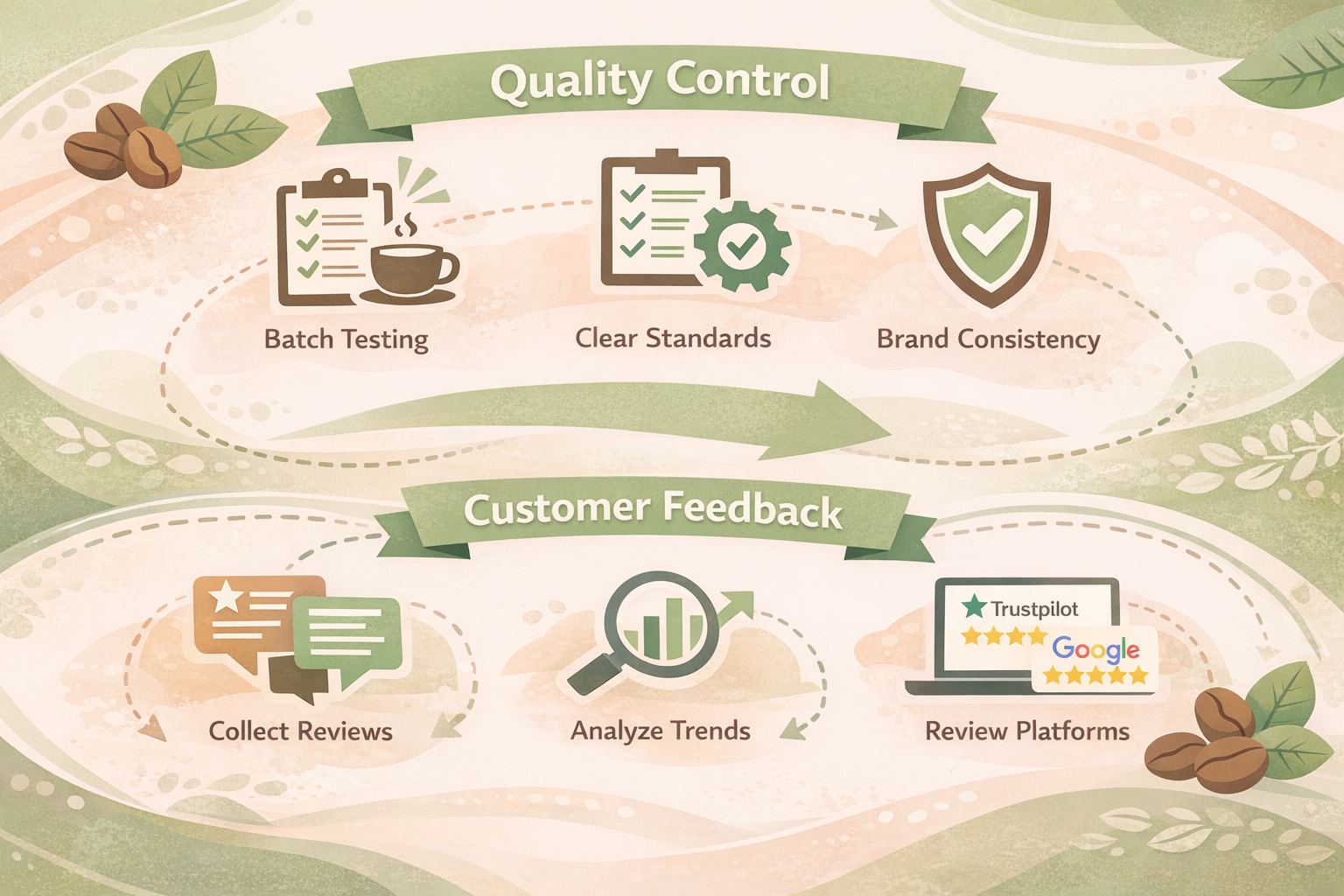
Consistency builds trust, and trust drives repeat purchases. This stage ensures your coffee meets expectations every time customers reorder. Strong systems here protect your reputation as demand grows.
Quality Control Measures
Quality control safeguards product standards across batches. Consistency reassures customers and reinforces brand reliability. This discipline reduces long-term risk.
- Implement batch-level quality checks
- Maintain clear quality benchmarks
- Use consistency as a brand promise
Customer Feedback Loop
Customer feedback provides insight into real-world performance. Structured collection prevents reactive decision-making. This loop supports continuous improvement.
- Collect reviews and feedback regularly
- Analyze patterns instead of isolated comments
- Use tools like Trustpilot or Google Reviews
6. Build Customer Relationships
Customer relationships extend beyond transactions. Strong engagement increases loyalty, referrals, and lifetime value. This stage focuses on creating experiences customers want to return to.
Exceptional Customer Service
Customer service shapes brand perception during critical moments. Timely, thoughtful responses build confidence and goodwill. Systems ensure consistency as volume increases.
- Respond promptly and clearly
- Use CRM tools to track interactions
- Treat service as part of the brand experience
Loyalty Programs
Loyalty programs reward repeat engagement and reinforce retention. They create incentives beyond discounts. Well-designed programs strengthen long-term relationships.
- Reward purchases and brand engagement
- Keep redemption simple and transparent
- Align rewards with brand values
Engage with Your Community
Community engagement builds emotional attachment. It transforms customers into advocates. This step humanizes your brand.
- Interact consistently on social platforms
- Host virtual tastings or live sessions
- Encourage two-way conversations
7. Adapt to Market Trends
Knowing how to make your own coffee brand successful means keeping up with market trends.
Adaptability keeps your brand relevant in a changing market. Awareness prevents stagnation without chasing every trend. This stage balances stability with evolution.
Regular Market Research
Market research informs smarter decisions. Ongoing monitoring reduces uncertainty. Staying informed supports a proactive strategy.
- Track consumer behavior changes
- Follow industry publications and webinars
- Identify emerging opportunities early
Innovation and Product Development
Innovation keeps your offering fresh without losing identity. Controlled experimentation reduces risk. Feedback-driven development strengthens relevance.
- Test new flavors in limited runs
- Use customer input to guide expansion
- Avoid overextension
8. Scale Your Coffee Brand
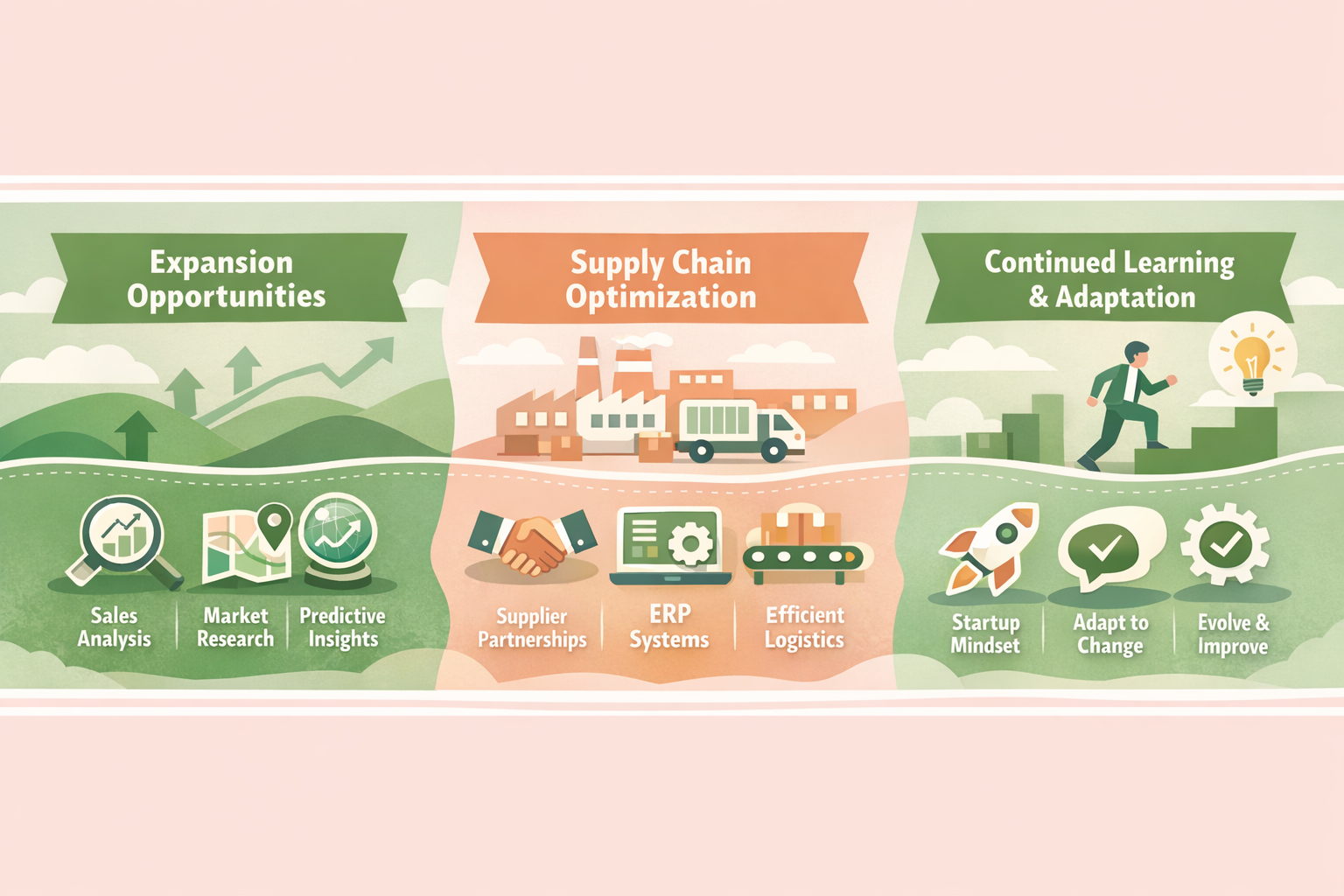
Scaling requires structure, not just demand. This stage ensures growth doesn’t compromise quality or experience. Strategic expansion supports longevity.
Expansion Opportunities
Expansion should follow data, not assumptions. Strategic growth strengthens brand reach sustainably. Clear signals guide decisions.
- Analyze sales performance and demand
- Identify scalable products and markets
- Use predictive analytics for planning
Supply Chain Optimization
Efficient supply chains support increased volume. Strong partnerships reduce bottlenecks. Systems protect consistency during growth.
- Strengthen supplier relationships
- Invest in ERP and logistics tools
- Streamline operations
Continued Learning and Adaptation
Growth introduces new challenges. Flexibility ensures resilience. Continuous learning keeps your brand competitive.
- Maintain a startup mindset
- Respond to customer and market shifts
- Refine systems as the business evolves
How to Create Your Own Coffee Brand with Supliful
Supliful equips you with the tools and resources needed to simplify operations when learning how to make a coffee brand, supporting brands that want consistency, scalability, and long-term value.
Rather than juggling manufacturing, fulfillment, and inventory, the platform centralizes these functions so founders can focus on brand strategy.
What Supliful Enables:
- Operational consistency: Standardized production and fulfillment for every order
- Brand ownership: Products ship under your branding, while Supliful remains invisible
- Predictable profitability: Transparent fees and order-level cost tracking
- Scalable systems: High-level end-to-end fulfillment infrastructure built to handle growth without complexity
- Long-term strategy support: Educational resources and roadmaps for building sustainable brands
How Orders Are Managed:
- Customer purchases happen directly through your store - your brand is front and center
- Orders are automatically routed for production, packaging, and shipping
- Fulfillment and logistics are fully handled, reducing operational risk
- You retain control over pricing, margins, and customer experience
Bringing Your Coffee Brand to Market with Confidence
Launching a coffee brand requires a clear strategy, operational discipline, and a strong understanding of the market.
Brands that align positioning, quality, and customer experience early are better equipped to grow sustainably and stand out in a competitive space.
Consistent product quality and dependable customer service remain key drivers of trust and repeat purchases.
Partnering with Supliful can simplify operations by removing the burden of inventory, production, and fulfillment, and help you build and skyrocket your brand, so feel free to get in touch.
FAQ


Related blogs
.avif)
Contribution Margin Calculator: Measure What Each Sale Contributes to Profit
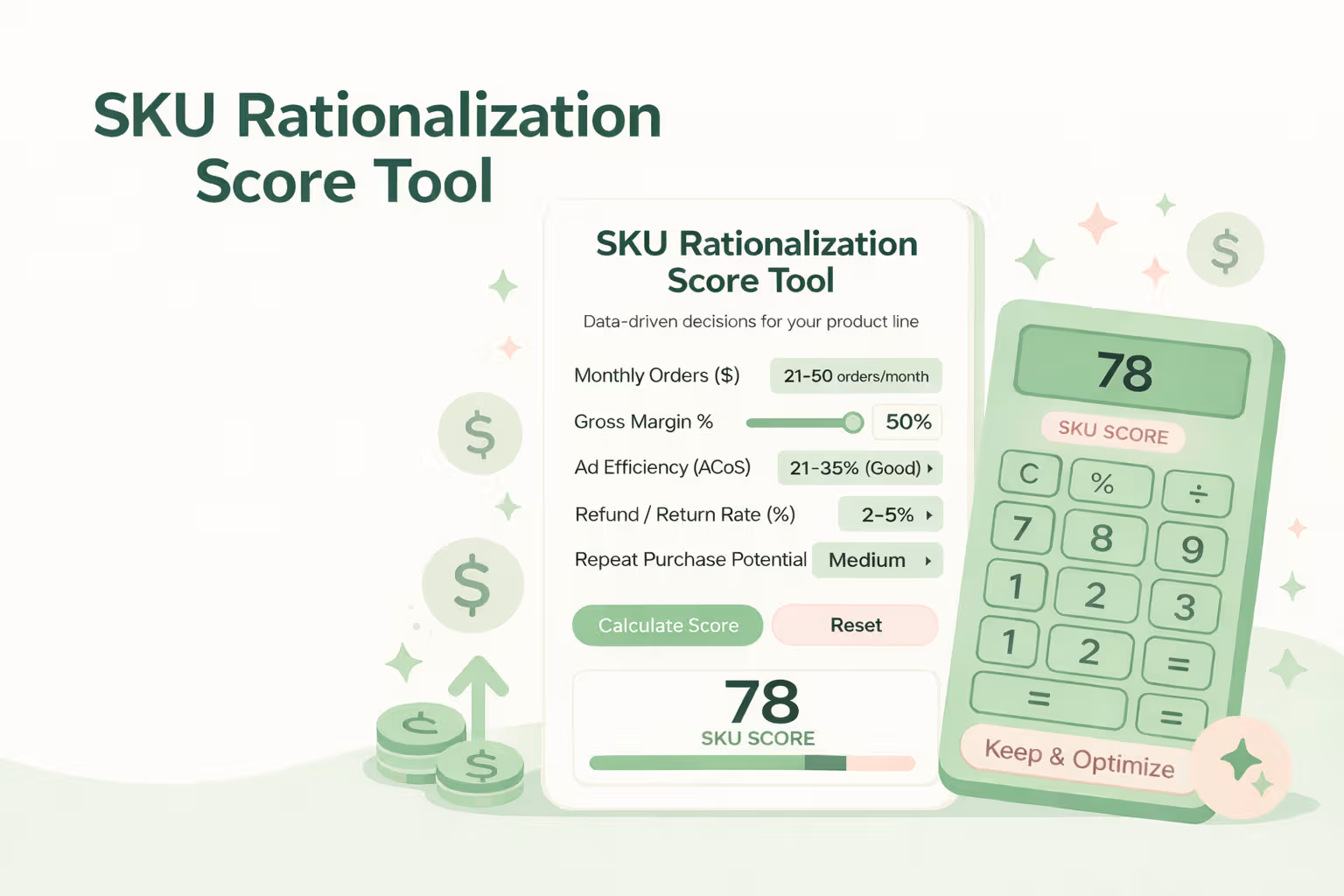
SKU Rationalization Score Tool: Cut Waste, Improve Margins, and Scale the Right Products