How To Do Market Research For Hair Products: Proven Steps to Stand Out

About Supliful
The hair care industry is one of the most competitive categories in beauty. Shampoos, conditioners, oils, serums, and styling products fill shelves and online marketplaces, often promising the same results.
Consumers don’t buy “just shampoo”; they buy solutions for frizz, color-treated hair, or growth. Winning brands focus on these problems and validate them with research before launch.
This guide explains how to do market research for hair products by starting with consumer problems and mapping how to test whether your solution has real demand, competitive viability, and profitability.
6 Key Steps to Master Market Research for Hair Products
Hair care is need-driven, not want-driven. Shoppers seek solutions for frizz, dandruff, or dryness. To meet those needs and stand out, here are six key steps to master market research for hair products.
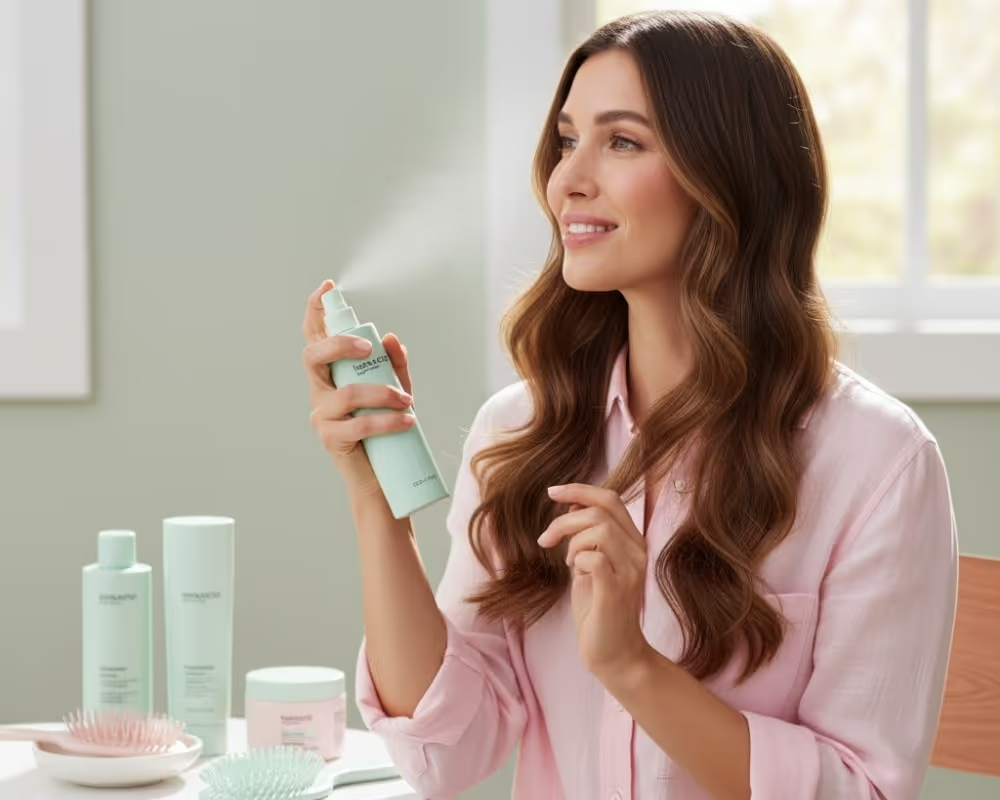
Step 1: Identifying Core Hair Care Problems
The first stage of research is spotting the problems that actually matter to consumers.
How to uncover them:
- Review mining: On Amazon, Sephora, and Ulta, look at 1-star and 2-star reviews of top-selling products. Complaints like “too drying,” “didn’t lather,” or “smells too strong” highlight gaps.
- Social listening: Track TikTok hashtags like #HairTok, #CurlyHair, #ScalpCare. Notice how many posts revolve around pain points rather than just product hype.
- Forums and communities: Subreddits like r/HaircareScience reveal the exact language customers use when discussing their concerns.
- Search trends: Use Google Trends to compare “best shampoo for dandruff” vs. “best shampoo for hair growth” to see which concerns are rising.
Example: The spike in searches for “scalp scrub” and “scalp serum” shows how consumers shifted focus from hair shafts to scalp health. Brands that identified this problem early built entire product lines around it.
Ready to turn insights into action? Once you identify which hair concerns have the strongest demand, our private-label hair products let you launch a targeted solution without the complexity of formulation or manufacturing.
Segmenting Problems by Hair Type
Unlike most beauty categories, hair care demands hyper-specific segmentation because what works for one hair type can actively damage another. A moisturizing shampoo perfect for coarse, curly hair will weigh down fine, straight hair. This isn't just a formulation concern - it's a market research imperative.
Why this matters:
When you validate demand for "anti-frizz serum," you're not validating one product—you're potentially validating four different segments:
- Fine hair (lightweight, non-greasy)
- Thick/coarse hair (heavy oils, deep penetration)
- Curly hair (curl definition without crunch)
- Color-treated hair (sulfate-free, color-safe)
Each has different price sensitivities, ingredient expectations, and competitive landscapes.
How to research hair type demand:
- Analyze search modifiers: Compare volume for "shampoo for fine hair" vs. "shampoo for curly hair." The modifier reveals which segments have the most active demand.
- Study reviews by hair type: Filter Amazon or Sephora reviews for phrases like "I have 4C hair" or "my hair is pin-straight" to see which types dominate feedback.
- Survey the intersection: Ask "What's your hair type AND what's your concern?" For example, "fine hair + volume loss" might be more profitable than broad "volume" products.
- Map ingredient expectations: Curly hair customers search for "glycerin-free" in humid climates. Fine hair buyers avoid heavy oils. Color-treated hair requires sulfate-free formulas.
Step 2: Testing Demand for Specific Solutions
Once you’ve identified potential problems, the next step is to validate whether your proposed solution has real demand.
Ways to test solution demand:
- Keyword research tools: Ahrefs, SEMrush, or Jungle Scout show search volume for problem-driven keywords like “anti-frizz shampoo” or “heat-protectant spray.”
- Amazon bestseller lists: Track whether problem-solving categories (like sulfate-free or vegan hair care) dominate top sellers.
- Survey testing: Ask target consumers which problems matter most. Tools like Typeform make it easy to test interest in “anti-hair loss oil” vs. “hydrating scalp serum.”
- Pre-launch pages: Create a simple landing page for your product concept, run ads, and measure click-throughs or sign-ups.
Example: A hair oil brand might test demand for “argan oil for hair growth” versus “castor oil for scalp health” using pre-launch campaigns. The higher click-through rate gives clear insight into which solution resonates most.

Step 3: Studying Competitors in Each Problem Area
Hair care competition is broad, but not every segment is equally crowded. For example, “anti-dandruff” is dominated by Head & Shoulders, while “bond repair” is owned by Olaplex, but there’s room in emerging categories like “scalp hydration” or “natural curl care.”
Research competitor presence by problem area:
- Amazon Category Rankings: Who dominates “anti-frizz” vs. “color-safe” shampoos?
- Retail placement: Which shelves are crowded, and where are gaps?
- Ad libraries: Study how competitors in your chosen problem niche frame their messaging.
- Social proof: See how many influencer posts exist around your chosen problem.
Example: Olaplex won the “bond repair” space by focusing on a highly technical-sounding problem that resonated with salon professionals and consumers alike. Researching competitors this way shows you whether to compete head-on or pivot to an adjacent problem.
This connects well to insights on differentiating your hair care brand from competitors, where the focus is on carving out a unique space in a crowded market.
Step 4: Validating Price and Packaging
Hair care is a volume-driven category, but brand packaging and price points heavily influence perception. Consumers often judge hair care by how it looks and what it costs before they try it.
What to research:
- Packaging expectations: Premium hair oils often use glass bottles with droppers, while budget shampoos stick to plastic.
- Price anchors: Compare price ranges within each problem niche (anti-frizz, dandruff, scalp care).
- Bundling potential: Many hair products sell best in sets (shampoo + conditioner + serum).
Example: If consumers are willing to pay $30+ for premium oils but only $12 for anti-dandruff shampoos, research guides you to position your solution in the right bracket.
Bonus Tip: Use our packaging cost calculator to confirm eco-friendly designs are viable. For bundles, the bundle price calculator ensures you don’t sacrifice profit when creating systems.
Step 5: Projecting Long-Term Profitability
Even if demand is strong, not every hair care idea translates into a profitable business. Shipping liquid products can be costly, and recurring purchases are necessary for growth.
How to research profitability:
- CLV (Customer Lifetime Value): Use our customer lifetime value calculator to see if subscription-friendly products like shampoo or conditioner create enough repeat business.
- Subscription modeling: Run numbers if you plan to launch a replenishment model.
- Logistics costs: Validate, especially important since hair care packaging is bulky and adds weight.
- ROAS (Return on Ad Spend): Test whether paid ads can profitably drive acquisition.
Example: A shampoo subscription brand may find CLV justifies higher ad spend, but only if shipping costs don’t erode margins. Calculators turn vague assumptions into hard data.
Step 6: Aligning with Certifications and Compliance
Hair products touch skin and scalp, meaning compliance is non-negotiable. Mislabeling or unapproved claims can lead to recalls or reputational damage.
Research areas:
- Certifications: Organic, vegan, cruelty-free, dermatologist-tested.
- Labeling: Ingredients, allergens, expiration dates, safety instructions.
- Region-specific compliance: FDA (U.S.), EU Cosmetics Regulation, or ASEAN Cosmetic Directive.
Example: Many indie hair oil brands stumbled when they couldn’t back up “clinically proven hair growth” claims, leading to consumer mistrust.
Connecting Research to Execution
Strong market research is wasted if it doesn’t shape execution. Here’s how to apply insights:
- Product launch: Align with validated problems, not assumptions.
- Marketing campaigns: Use insights from problem-driven language in ads and influencer collaborations.
- SEO and content: Build blogs targeting problem-based queries
- Paid ads: Confirm spend efficiency
Pro Tip: See our blog on how to properly launch a profitable shampoo business for tactical steps.)
Solve Real Hair Problems with Research
Doing market research for hair products isn’t about guessing which shampoo bottle design might sell. It’s about deeply understanding the problems consumers are actively trying to solve, and validating whether your solution has enough demand, differentiation, and profitability to succeed.
When you frame research this way, you stop competing as “just another hair care brand” and instead position yourself as the trusted solution to specific, unmet needs. That’s what separates a commodity product from a brand that grows and lasts.
The information provided in this article is meant for general informational purposes only and should not be considered as professional or legal advice. We do not guarantee the completeness, accuracy, reliability, or suitability of the information in this article. We strongly recommend seeking professional guidance that suits your individual circumstances.
FAQ

Related blogs
.avif)
Influencer Marketing ROI Forecaster Calculator: Know Your True ROI Before Spending a Dollar on Influencers
.avif)
.avif)
.avif)