What Are the Advantages of Labelling: Key Benefits Your Business Can't Ignore
.avif)
Most businesses put real effort into their product, but the label? That part often gets treated as an afterthought. That is a mistake. Labelling benefits go far beyond slapping a name on a box. Done right, a label communicates trust, meets legal requirements, guides purchasing decisions, and strengthens brand recognition all at once.
Whether you are running an e-commerce store, manufacturing goods, or managing a retail line, how you label your product shapes how people see it before they even open the package.
The Core Benefits of Labelling Across Key Areas
Labelling is not a single-function tool. It works across multiple dimensions of your business simultaneously: brand development, compliance, logistics, and safety, illustrating the pros and cons of your operations. Here is a breakdown of where it delivers the most value.
1. Clear Product Identification and Brand Recognition
A label is often the first thing a customer sees. It tells them who made it, what it is, and whether it fits with what they are looking for, which can help in conveying essential information. Strong, consistent labelling builds recognition over time; customers start to spot your product on a shelf without needing to search.
- Brand Identity: Using the same fonts, colors, and logos helps people remember who you are.
- Customer Clarity: Clear product names and variants stop people from getting confused at the shelf.
- Market Presence: Creative labelling helps your product pop when surrounded by competitors.
2. Accurate Consumer Information and Transparency
Today’s buyers want to know exactly what they are getting. Ingredients, materials, usage instructions, and country of origin: these are not just nice-to-have features. They are often deciding factors. Transparent labelling builds confidence and reduces returns caused by unmet expectations.
- Support Efficiency: If the info is on the label, you get fewer basic questions in your support inbox.
- Quality Signaling: Being open about what is inside shows you are proud of your quality.
- Trust Building: Honest labels stop disputes before they start and keep reviews positive.
3. Regulatory Compliance and Legal Protection
Depending on your industry, incorrect or missing label information can result in fines, product recalls, or market bans. Compliance is not optional: it is a baseline. Proper labelling protects your business from legal exposure and keeps products on shelves.
- Strict Standards: Sectors like food or pharma have very specific rules you have to follow.
- Audit Readiness: Labels act as physical proof that you are following the law during inspections.
- Risk Mitigation: Correct safety info can be your best defense if a product is misused.
4. Improved Inventory and Supply Chain Management
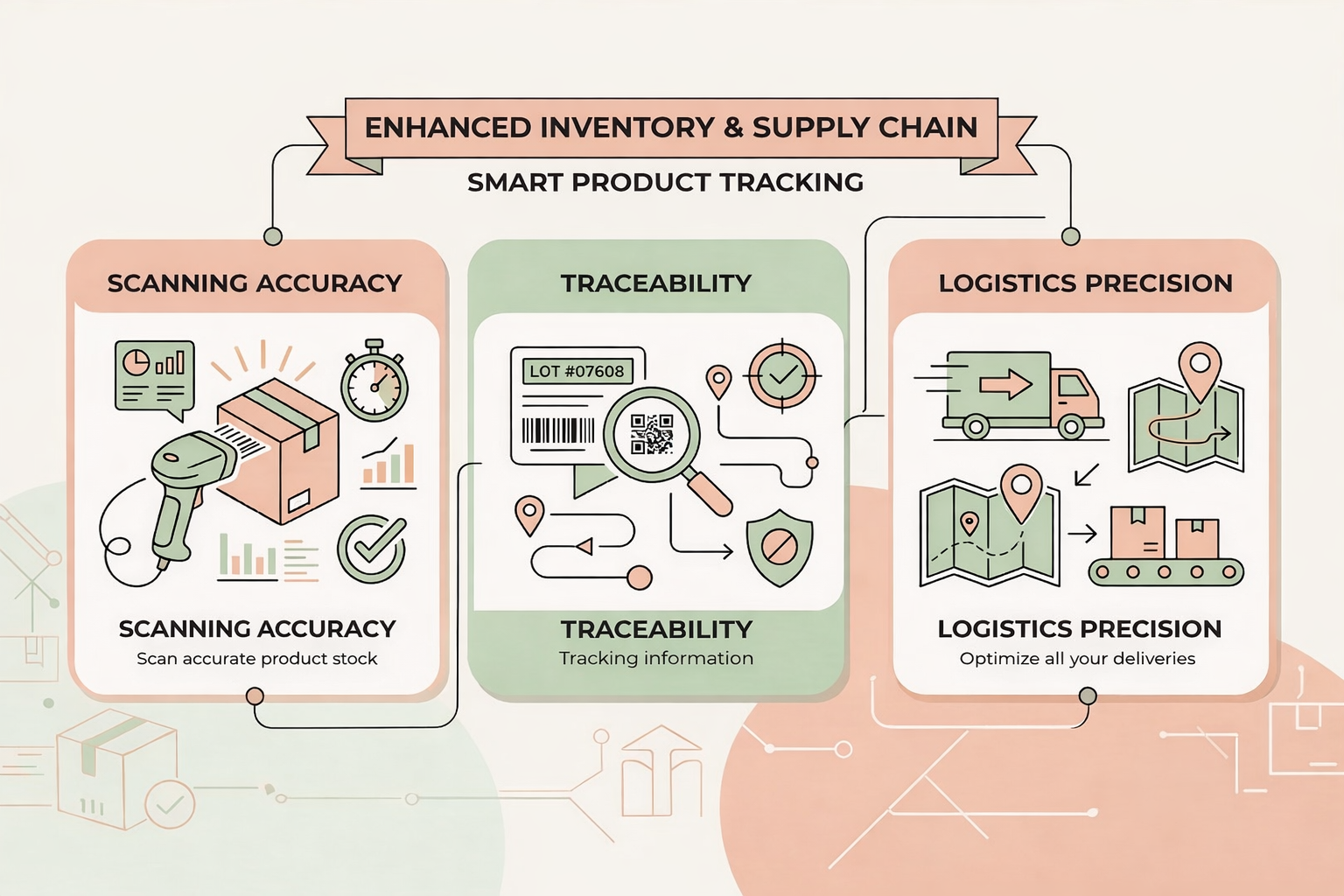
Internally, labelling is what keeps products trackable. Barcodes, QR codes, lot numbers, and SKU data on labels allow warehouses and logistics teams to move products accurately and at speed. Errors drop. Efficiency climbs.
- Scanning Accuracy: Barcodes make checking stock fast and stop manual entry mistakes.
- Traceability: Having lot numbers makes the recall process much less of a headache.
- Logistics Precision: Clear labels ensure the right box gets on the right truck every time.
5. Enhanced Safety and Hazard Communication
For any product that carries risk: chemicals, medications, and electrical equipment, labels are a critical safety mechanism. Clear hazard warnings, handling instructions, and disposal guidance protect end users and reduce the chance of misuse.
- Hazard Alerts: Symbols and warning text tell people exactly how to stay safe.
- Error Prevention: Clear dosage or storage info prevents dangerous mistakes with medicine.
- Liability Reduction: Properly warning users protects your company from legal claims.
How Labelling Impacts Consumer Buying Decisions
People make quick judgments. A shopper deciding between two similar products will often pick the one with better presentation: a cleaner layout, more readable information, and a design that looks premium. The importance of labelling in marketing comes down to this: your label is doing sales work even when nobody from your team is in the room.
- First Impressions: A sharp label removes the "hidden friction" that stops someone from buying.
- Psychological Signaling: When a label looks professional, people assume the product inside is high quality too.
- Decision Influence: Most people decide what to buy while looking at the shelf, not while watching an ad.
- Reducing Doubt: If a label is messy, people get nervous. If it is clear, they feel confident spending money.
Labelling in Specific Industries
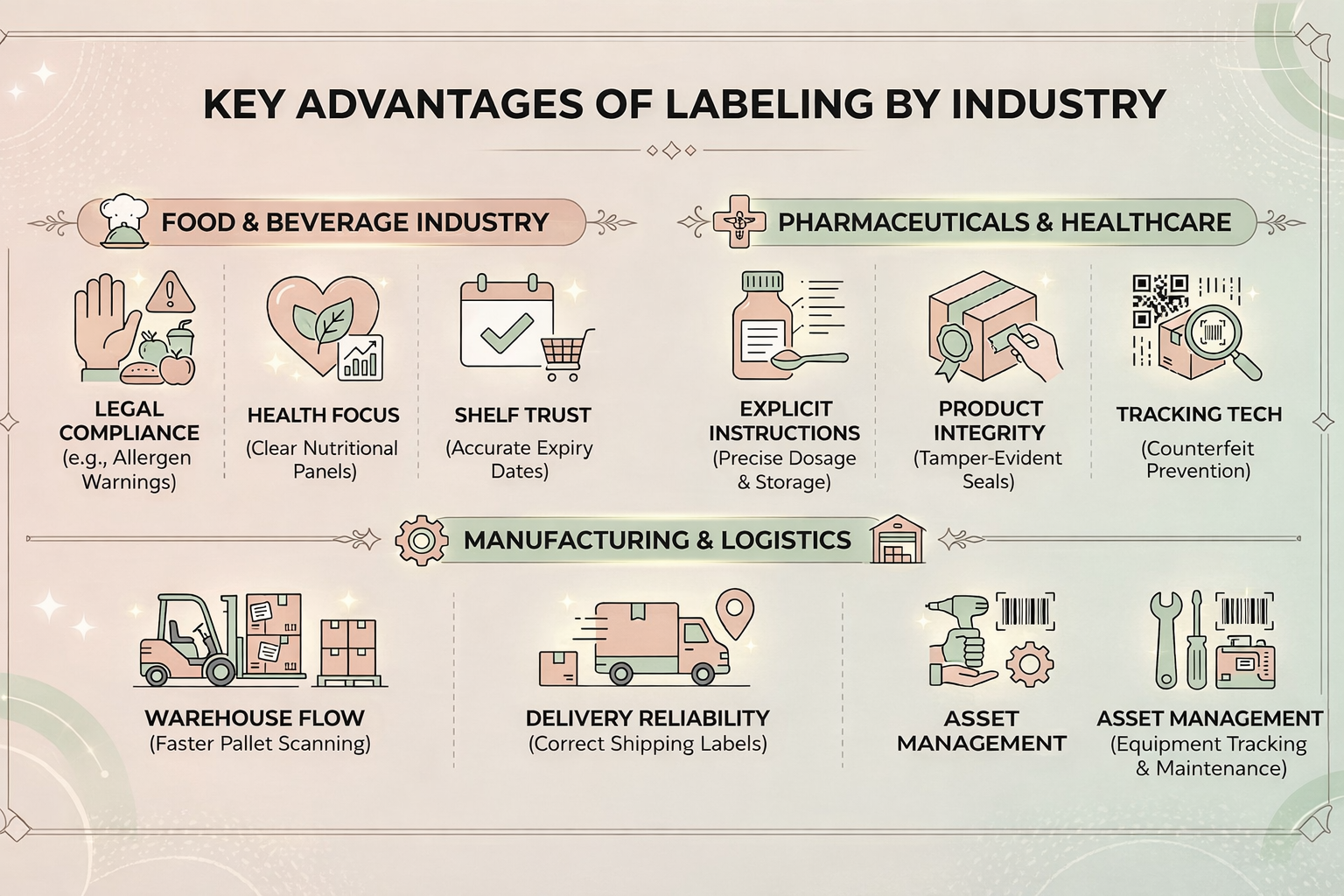
While every business benefits from strong labelling, certain industries rely on it in very specific ways. The requirements, risks, and opportunities differ considerably depending on your sector.
Food and Beverage
This is one of the most tightly regulated labelling environments. Ingredient lists, allergen warnings, nutritional panels, expiry dates, and country of origin: all of it is mandatory in most markets. Get it wrong, and you are facing a recall.
- Legal Compliance: Naming allergens is a life-saving requirement, not a suggestion.
- Health Focus: Good nutritional info on product labels helps you win over health-conscious shoppers.
- Shelf Trust: Seeing a clear "best before" date makes customers feel safe buying from you.
Pharmaceuticals and Healthcare
Accuracy here is not just a business issue: it is a patient safety issue. Labels on medications and medical devices must be precise, legible, and compliant with health authority standards. Any ambiguity can cause harm.
- Explicit Instructions: You cannot leave any room for doubt when it comes to dosage or storage.
- Product Integrity: Tamper-evident labels reassure customers that the product is fresh and untouched.
- Tracking Tech: Digital tracking on labels is becoming a standard for stopping fake goods.
Manufacturing and Logistics
In high-volume environments, labelling keeps the whole operation moving. A mislabelled pallet or incorrect SKU can cascade into significant losses. Robust labelling systems reduce errors and make audits far less painful.
- Warehouse Flow: Pallets move much faster when the labels are easy to scan and read.
- Delivery Reliability: Good shipping labels mean your customers actually get what they paid for.
- Asset Management: Labelling your own equipment makes maintenance and tracking way easier.
Best Practices for Successful Branded Labeling in eCommerce
Advantages of brand labelling are only realised when the execution is consistent and deliberate. A few best practices worth following for product labels:
- Clean Design: If people have to squint to read your label, you have too much text.
- Durability: One of the key advantages of using high-quality product labels. Make sure your labels can handle being tossed around in a hot delivery truck.
- Engagement: Your audience can convey the advantages and disadvantages of your products. A simple QR code can turn a one-time buyer into a loyal social media follower.
- Quality Checks: Always print a test sample first; colors on a screen rarely match the final sticker.
- Proactive Updates: Keep an eye on the law so you can update your labels before a new regulation hits.
How to Maximize the Labelling for Your Business
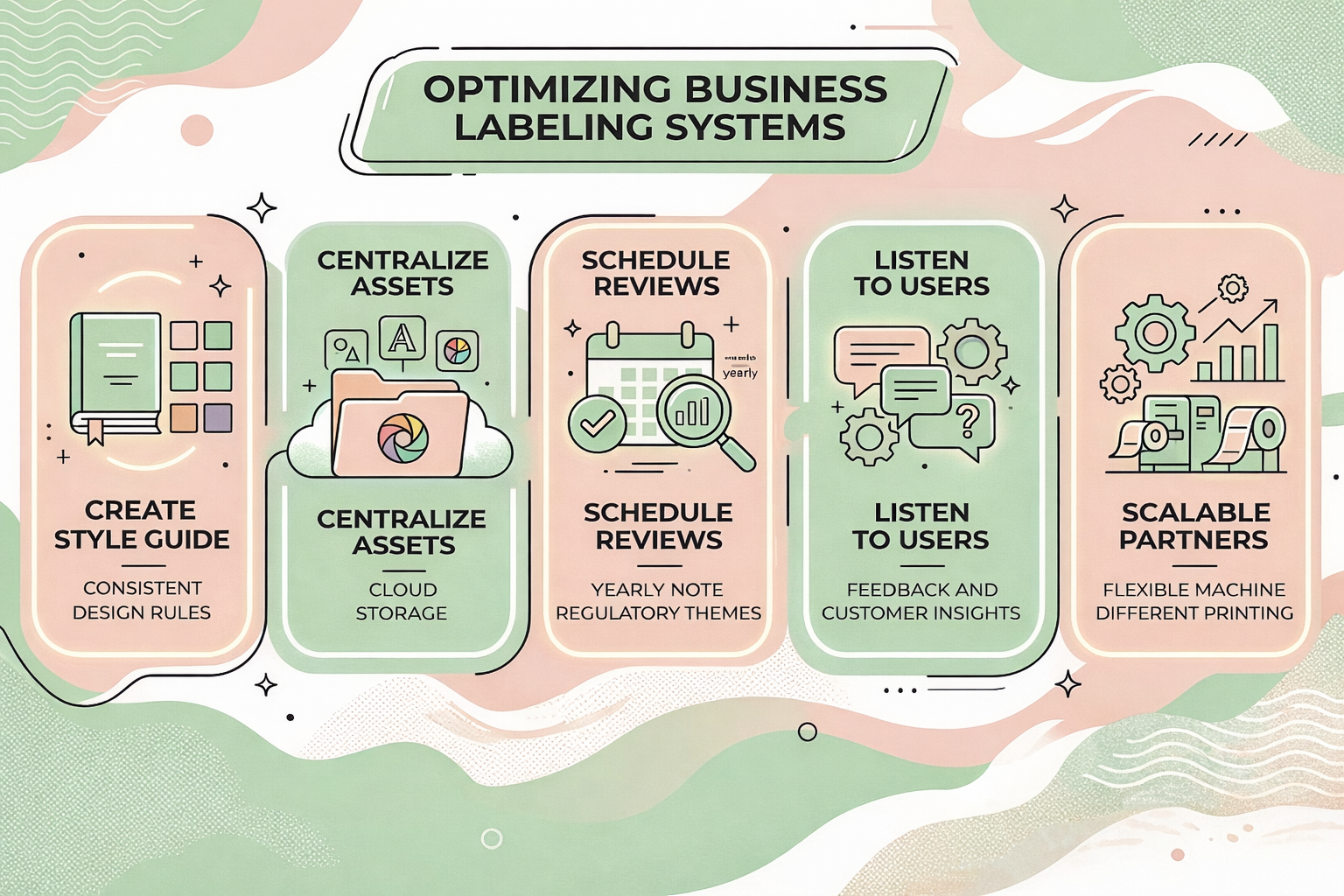
A good labelling strategy is not set and forget. It evolves with your product range, customer expectations, and regulatory environment. To get consistent results, treat labelling as a system rather than a one-off design task.
- Create a Guide: The advantages and disadvantages of different types of labels. Write down your rules for colors and fonts so every label stays consistent, especially for types of labels that require specific branding.
- Centralize Assets: Keep your designs in one place so it is easy to make a quick update.
- Schedule Reviews: Check your labels once a year to make sure they still follow the latest laws.
- Listen to Users: If customers keep asking the same question, put the answer on the label.
- Scalable Partners: Find a printer who can handle 100 labels today and 10,000 next month.
Start Leveraging the Benefits of Labelling Today
Every product that leaves your facility or warehouse is a chance to make an impression or a mistake. The businesses that treat labelling seriously consistently outperform those that do not, across metrics from customer trust to operational efficiency to regulatory standing.
Do not wait for a compliance issue or a batch of confusing customer queries to push you into action. Review your current labelling, identify the gaps, and work with a provider who can help you close them. The investment is small. The upside is not.

.avif)

