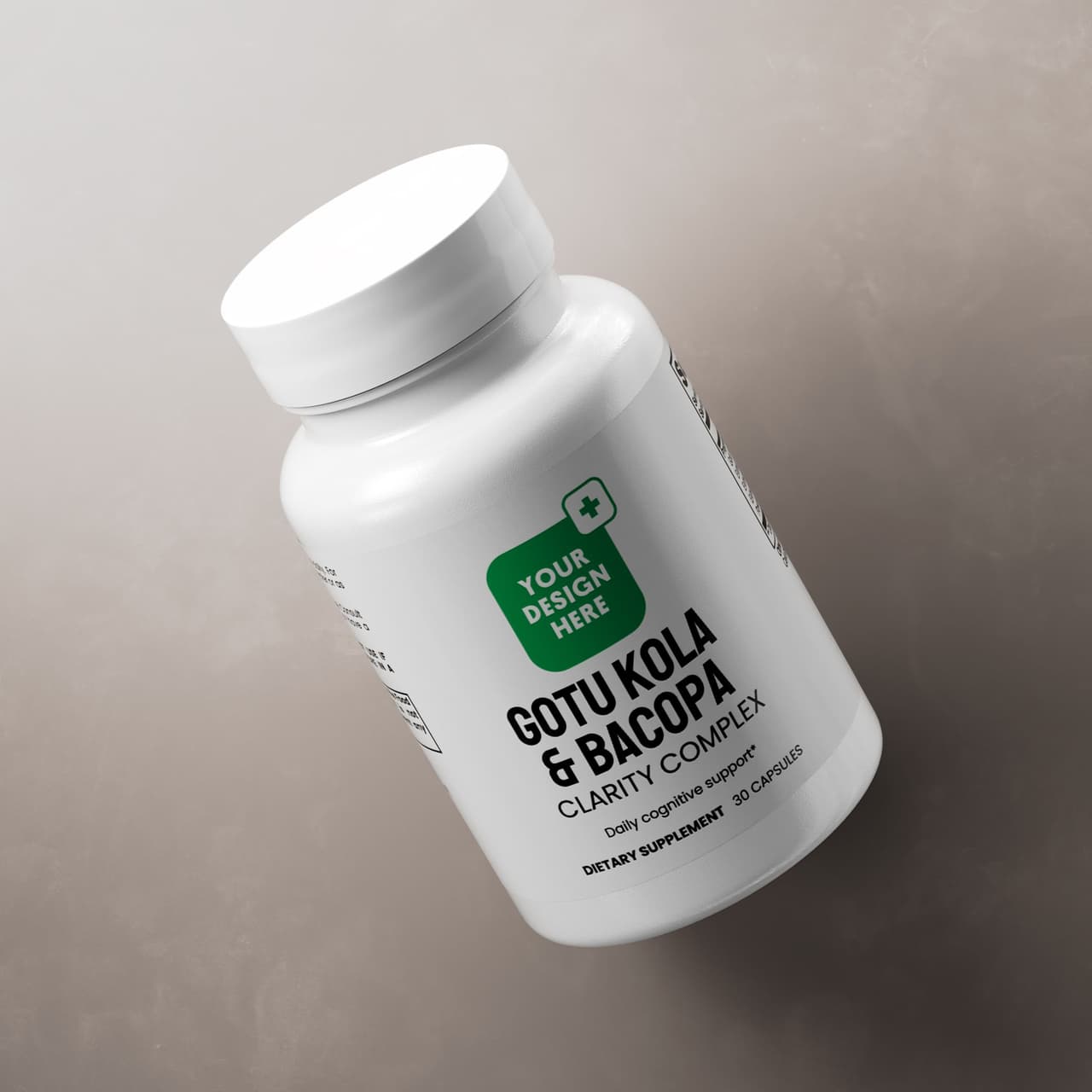
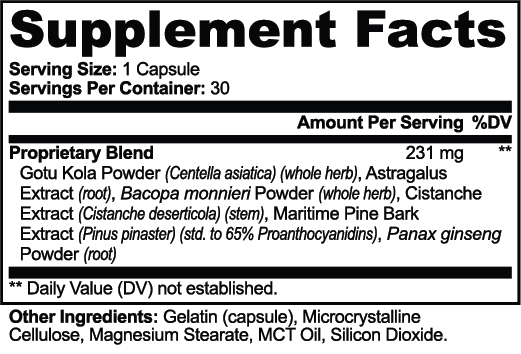
Use these facts to educate your customers and promote your products.
Positive modulation of cognition and mood in the healthy elderly volunteer following the administration of Centella asiatica
This randomized, placebo-controlled, double-blind study investigated whether Centella asiatica (gotu kola), long reputed in traditional medicine to support cognition, could improve cognitive function in healthy elderly adults. Twenty-eight participants took the plant extract at doses of 250, 500, or 750 mg once daily for two months, with cognitive performance measured via a computerized test battery and event-related potentials, and mood assessed using Bond–Lader visual analogue scales at baseline and after single-dose, one-month, and two-month intervals. The highest dose enhanced working memory, increased the N100 amplitude of event-related potentials, and improved self-rated mood. The authors conclude that Centella asiatica shows potential to attenuate age-related decline in cognitive function and mood in healthy elderly individuals, though the underlying mechanisms require further investigation.
SourceNootropic and Anti-Alzheimer’s Actions of Medicinal Plants
This review examines the nootropic and anti-Alzheimer's potential of six medicinal plants - Centella asiatica, Clitoria ternatea, Crocus sativus, Terminalia chebula, Withania somnifera, and Asparagus racemosus - as candidates for reversing cognitive dysfunction with fewer adverse effects than conventional treatments. Motivated by the rising global burden of Alzheimer's disease, an age-related neurodegenerative disorder marked by progressive loss of cognition, memory, and language alongside behavioral disturbances for which no cure currently exists, the authors survey the literature on each plant's neuroprotective and anti-Alzheimer's applications, their bioactive compounds and metabolites, associated effects in animal models and humans, and proposed molecular mechanisms. The review highlights the promising link between traditional medicine and efforts to halt Alzheimer's pathogenesis, offering new insight into the search for effective anti-Alzheimer's drugs.
SourceEffects of a Standardized Bacopa monnieri Extract on Cognitive Performance, Anxiety, and Depression in the Elderly: A Randomized, Double-Blind, Placebo-Controlled Trial
This randomized, double-blind, placebo-controlled trial evaluated the effects of standardized Bacopa monnieri whole-plant dry extract on cognitive function, affect, safety, and tolerability in healthy elderly adults. Following a 6-week placebo run-in, 54 community-recruited participants aged 65 or older (mean 73.5 years) without signs of dementia were randomized to receive 300 mg/day of B. monnieri extract or placebo for 12 weeks, with 48 completing the study (24 per group). The primary outcome was delayed recall on the Rey Auditory Verbal Learning Test (AVLT), alongside measures of attention, working memory, anxiety, depression, mood, and vital signs. Controlling for baseline cognitive deficit, the Bacopa group showed improved AVLT delayed recall and Stroop Task performance relative to placebo, as well as decreased depression scores, combined anxiety scores, and heart rate, while the placebo group did not improve; no effects were found on divided attention, the WAIS digit task, mood, or blood pressure. The extract was well tolerated with few adverse events, mainly mild stomach upset, leading the authors to conclude that B. monnieri has potential for safely enhancing cognitive performance in aging populations.
SourceAcute Effects of Bacopa monnieri (CDRI 08) on Cognitive Performance
This double-blind, placebo-controlled crossover study assessed the acute cognitive effects of a standardized Bacopa monnieri extract (KeenMind® – CDRI 08) in healthy adults, addressing a gap in research since prior work had focused mainly on chronic administration and pre-clinical acute effects. Twenty-four volunteers each completed six repetitions of the Cognitive Demand Battery (CDB) after consuming placebo, 320 mg, or 640 mg of the extract in a crossover design, with cardiovascular and mood measures taken before and after treatment. The 320 mg dose improved CDB performance at the first, second, and fourth post-dosing repetitions, while neither dose affected cardiovascular activity or reduced task-induced stress and fatigue. The authors concluded that examining an earlier pharmacological window, using less memory-specific cognitive tasks, and applying more temporally sensitive measures of brain activity may better clarify the acute neurocognitive properties of Bacopa monnieri.
SourceReview of the Botanical Characteristics, Phytochemistry, and Pharmacology of Astragalus membranaceus (Huangqi)
This paper reviews the botanical characteristics, phytochemistry, and pharmacology of Astragali Radix (Astragalus membranaceus), one of the most widely used traditional Chinese herbal medicines, valued as an immune stimulant, tonic, antioxidant, hepatoprotectant, diuretic, antidiabetic, anticancer, and expectorant. Drawing on information gathered from online databases, libraries, and local texts, the authors note that more than 100 compounds—including flavonoids, saponins, polysaccharides, and amino acids—have been identified, with various biological activities reported. The review concludes that further study of Astragali Radix could support the development of new drugs and therapies and that improving its utilization warrants additional research.
SourcePycnogenol® French maritime pine bark extract in randomized, double-blind, placebo-controlled human clinical studies
This review provides a comprehensive overview of Pycnogenol® French maritime pine bark extract, a well-studied patented extract from the bark of Pinus pinaster ssp. Atlantica, drawing on 39 randomized, double-blind, placebo-controlled human clinical trials involving 2,009 subjects. Across supplementation periods ranging from two weeks to six months, the extract has been shown to beneficially affect cardiovascular health, chronic venous insufficiency, cognition, joint health, skin health, eye health, women's health, respiratory health and allergies, oral health, and sports performance. The authors discuss the underlying mechanisms of action—including antioxidative and anti-inflammatory effects, improved endothelial function, and reinforcement of the extracellular matrix—as demonstrated in in vitro, in vivo, and clinical studies. The review aims to consolidate the available "gold standard" placebo-controlled evidence across these health domains and to serve as a basis for further research into the applications and mechanisms of this unique pine bark extract.
Source